

Phishing Attack Meaning: Types, Examples, And Prevention
A single deceptive email or fake website can drain your crypto wallet in seconds. Understanding the phishing attack meaning is essential for anyone holding digital assets, because these scams remain the most common way people lose their cryptocurrency, not through blockchain hacks, but through simple human manipulation.
Phishing attacks trick you into handing over sensitive information like passwords, private keys, or seed phrases. Attackers impersonate trusted sources, exchanges, wallet providers, even friends, to create urgency and bypass your natural skepticism. The techniques have evolved far beyond obvious spam emails, and modern phishing campaigns can fool even experienced users.
At FinTech Dynasty, we focus on the practical side of protecting your digital wealth. Self-custody means nothing if a phishing scam compromises your credentials before your hardware wallet ever arrives. That's why security education sits at the core of everything we teach.
This guide breaks down exactly how phishing attacks work, the different types you'll encounter, real examples from the crypto space, and concrete steps to protect yourself. Whether you're new to cryptocurrency or already managing your own keys, recognizing these threats is your first line of defense.
Why phishing attacks matter for crypto holders
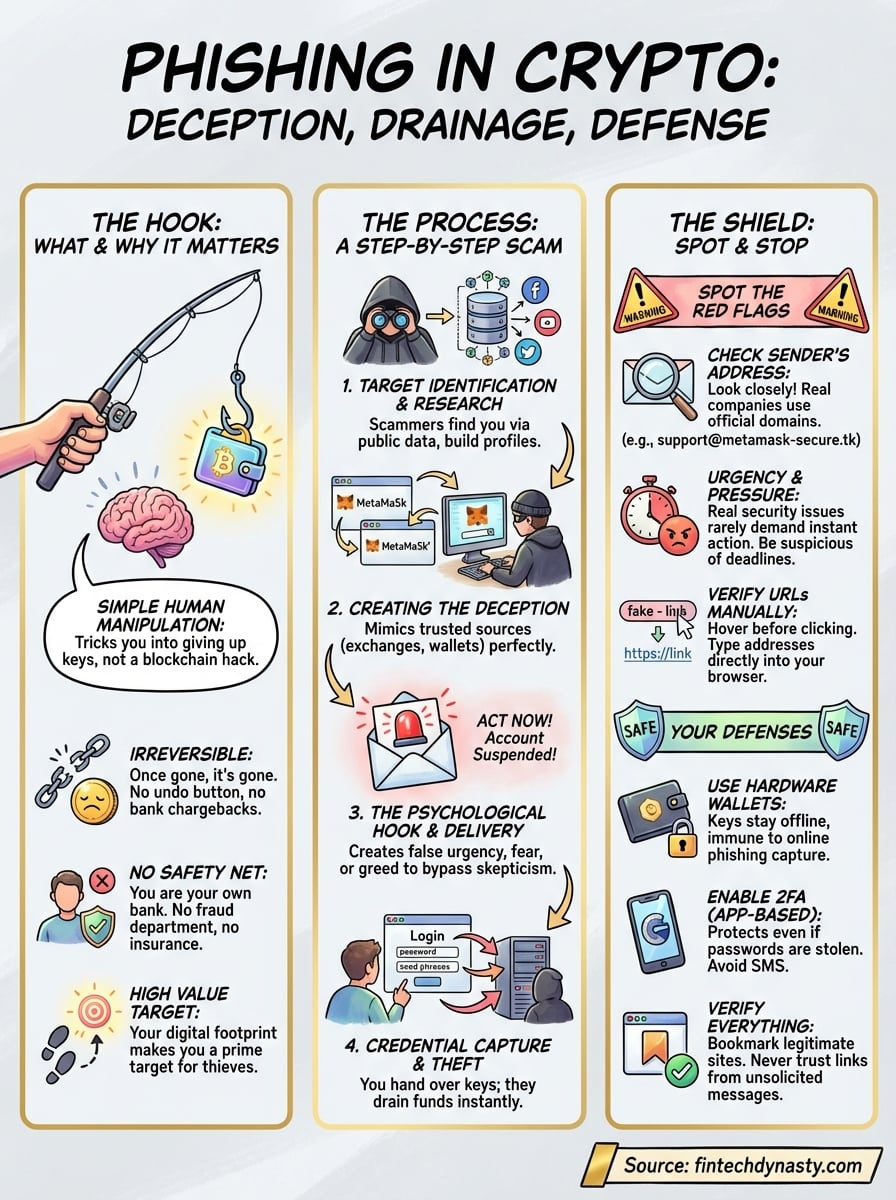
Traditional phishing scams cost victims money and time, but cryptocurrency phishing creates permanent, irreversible losses. Understanding the phishing attack meaning becomes critical when you realize that blockchain transactions cannot be undone, reversed, or disputed. Banks offer fraud protection and chargebacks, but once your crypto leaves your wallet, you have zero recourse.
Cryptocurrency holders face unique vulnerabilities that make them high-value targets. Your digital assets exist entirely in software, protected only by private keys and seed phrases. Unlike traditional accounts where banks monitor suspicious activity and implement fraud detection systems, crypto wallets have no safety net. Every security decision falls on you, and phishing attackers exploit this reality with surgical precision.
Your crypto wallet has no customer service line, no fraud department, and no insurance policy that covers user error.
Irreversible losses in cryptocurrency
Banks can freeze accounts, reverse transactions, and investigate fraud before permanent damage occurs. Cryptocurrency offers none of these protections by design. The same features that make crypto appealing, decentralization and user control, also mean that phishing victims watch their funds disappear with no way to recover them.
Scammers know this, which is why crypto holders receive ten times more phishing attempts than average internet users. Attackers target you because they know a single successful attack could net them thousands or even millions of dollars in seconds. Once you approve a malicious transaction or enter your seed phrase into a fake wallet interface, the transfer completes instantly and permanently.
You become the primary target
Crypto holders advertise their value simply by participating in the ecosystem. When you interact with exchanges, DeFi protocols, NFT marketplaces, or crypto communities, you create a digital footprint that attackers use to identify targets. Your email address appears in database breaches, your wallet address becomes public on blockchains, and your social media activity signals that you hold digital assets.
Attackers build detailed profiles of crypto users through data aggregation and social engineering. They monitor which exchanges you use, which wallets you prefer, and even estimate your holdings based on transaction history. This research allows them to craft highly personalized phishing messages that reference real exchanges you use, real transactions you made, or real people in your network.
The psychological tactics deployed against crypto holders specifically target common behaviors. Scammers know you likely manage multiple wallets, interact with new platforms regularly, and receive frequent legitimate security notifications. They exploit this noise by blending phishing attempts seamlessly into your normal digital routine.
Exchange safety creates false comfort
Many crypto holders start their journey on centralized exchanges and develop a false sense of security. Exchanges implement robust security measures, two-factor authentication, and withdrawal confirmations that protect accounts from direct compromise. This protection leads users to underestimate phishing risks when they finally move assets to self-custody.
Moving to hardware wallets or software wallets dramatically changes your threat landscape. Exchanges employ security teams, monitor suspicious activity, and sometimes even reverse fraudulent transactions before they finalize. Your personal wallet has none of these safeguards. Phishing attackers specifically target users during this transition period, knowing you possess significant holdings but may lack the security habits needed for self-custody.
Every interaction with your wallet represents a potential attack vector. Firmware updates, wallet connections to DeFi platforms, transaction signing, and seed phrase management all create opportunities for phishing attacks. Attackers don't need to break encryption or hack blockchains, they just need you to voluntarily provide access through a convincing fake interface.
How phishing attacks work step by step
Phishing attacks follow a predictable sequence that helps attackers maximize success rates while minimizing detection. Understanding the phishing attack meaning requires breaking down this process into distinct stages, because recognizing where you are in the attack chain gives you multiple opportunities to stop it before damage occurs.
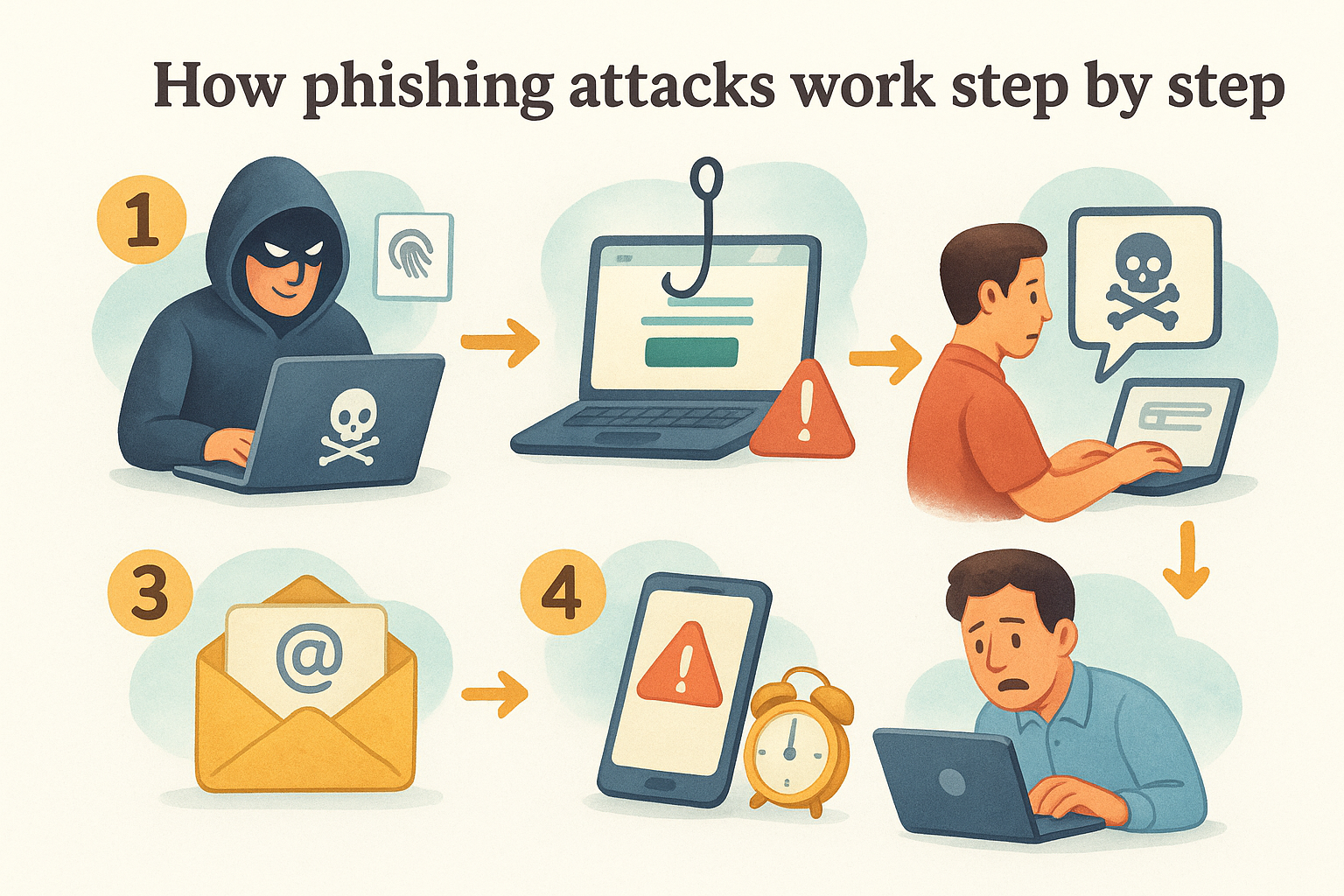
Step 1: Target identification and research
Attackers begin by identifying potential victims through database breaches, social media scraping, or blockchain analysis. They collect your email address, username, transaction history, and any public information about which platforms you use. Crypto holders become targets when their addresses appear in NFT purchases, DeFi transactions, or exchange withdrawal records that exist permanently on public blockchains.
Research continues as scammers build detailed profiles. They note which wallets you interact with, when you're most active online, and what security practices you follow or ignore. This reconnaissance phase can last weeks or months before the actual attack begins.
Step 2: Creating the deception
Scammers design fake emails, websites, or applications that perfectly mimic legitimate services. They clone login pages from popular exchanges, replicate wallet interfaces down to the exact fonts and colors, and even forge email headers to make messages appear from official domains. Modern phishing kits automate this process, allowing attackers to create convincing copies of any platform in minutes.
The deception extends beyond visual design. Attackers register domain names that look nearly identical to real ones, using techniques like replacing letters with similar characters (MetaMask vs MetaMa5k) or adding subtle misspellings that escape quick glances.
Step 3: Delivery and initial contact
Your phishing message arrives through email, direct message, SMS, or even social media comments. Attackers time these messages strategically, often sending them during market volatility, platform maintenance windows, or immediately after legitimate security announcements from real companies. They know you expect communication during these periods, which reduces your skepticism.
Delivery methods vary based on available contact information. Email phishing remains most common, but SMS phishing (smishing) and social media attacks continue growing as attackers diversify their approach.
Phishing messages arrive when you least expect them but are most likely to act without thinking.
Step 4: The psychological hook
Messages create artificial urgency through claims of security breaches, account suspensions, or limited-time opportunities. The language pushes you toward immediate action without verification, using phrases like "verify your account within 24 hours" or "suspicious activity detected." Fear and greed drive most successful phishing attacks.
Step 5: Credential capture and theft
When you click the malicious link and enter your information, attackers capture everything instantly. Your login credentials, private keys, or seed phrases transmit directly to their servers. Within seconds, they access your real accounts or wallets and begin draining funds before you realize the mistake.
Common types of phishing attacks
Phishing attacks come in multiple forms, each designed to exploit different communication channels and psychological vulnerabilities. Recognizing these variations helps you defend against attacks regardless of where they appear. The phishing attack meaning expands beyond simple email scams to include sophisticated multi-channel campaigns that target specific individuals or groups based on their behavior and digital footprint.
Email phishing
Traditional email phishing casts the widest net by sending generic messages to thousands of recipients simultaneously. These attacks impersonate well-known companies like Coinbase, Binance, or MetaMask, claiming your account needs verification or that suspicious activity requires immediate attention. You receive messages with official-looking logos, professional language, and links to fake login pages that steal your credentials the moment you enter them.
Email phishing succeeds through volume rather than precision. Attackers know that even a 0.5% success rate across 10,000 emails still compromises 50 accounts, making the effort worthwhile despite obvious red flags that alert careful readers.
Spear phishing
Spear phishing targets you specifically using researched personal information to craft convincing, customized messages. Attackers reference your real transactions, mention platforms you actually use, and time their messages to coincide with legitimate account activity. These attacks appear far more credible because they include details only someone with access to your information would know.
Spear phishing messages feel personal because they are, attackers spend hours researching individual targets before striking.
Crypto holders face spear phishing when scammers monitor blockchain transactions and send targeted emails immediately after large transfers, pretending to be the receiving exchange or wallet provider requesting "confirmation."
Smishing and vishing
Smishing uses text messages while vishing relies on voice calls to execute phishing attacks. You receive SMS messages claiming your wallet requires urgent verification or phone calls from "support representatives" requesting your seed phrase to resolve fabricated security issues. These methods exploit the trust people place in phone-based communication compared to email.
Clone phishing
Clone phishing duplicates legitimate messages you previously received from real companies. Attackers intercept or access earlier correspondence, create exact replicas with modified links, and send them from spoofed addresses. You see a message that looks identical to previous legitimate communications, making detection extremely difficult without careful URL verification.
Whaling
Whaling attacks target high-value individuals like major crypto holders, exchange executives, or prominent DeFi users. These sophisticated campaigns combine extensive research with advanced social engineering to compromise accounts holding substantial assets. Attackers invest significant time and resources because a single successful whaling attack can yield millions in stolen cryptocurrency.
Real-world phishing examples and templates
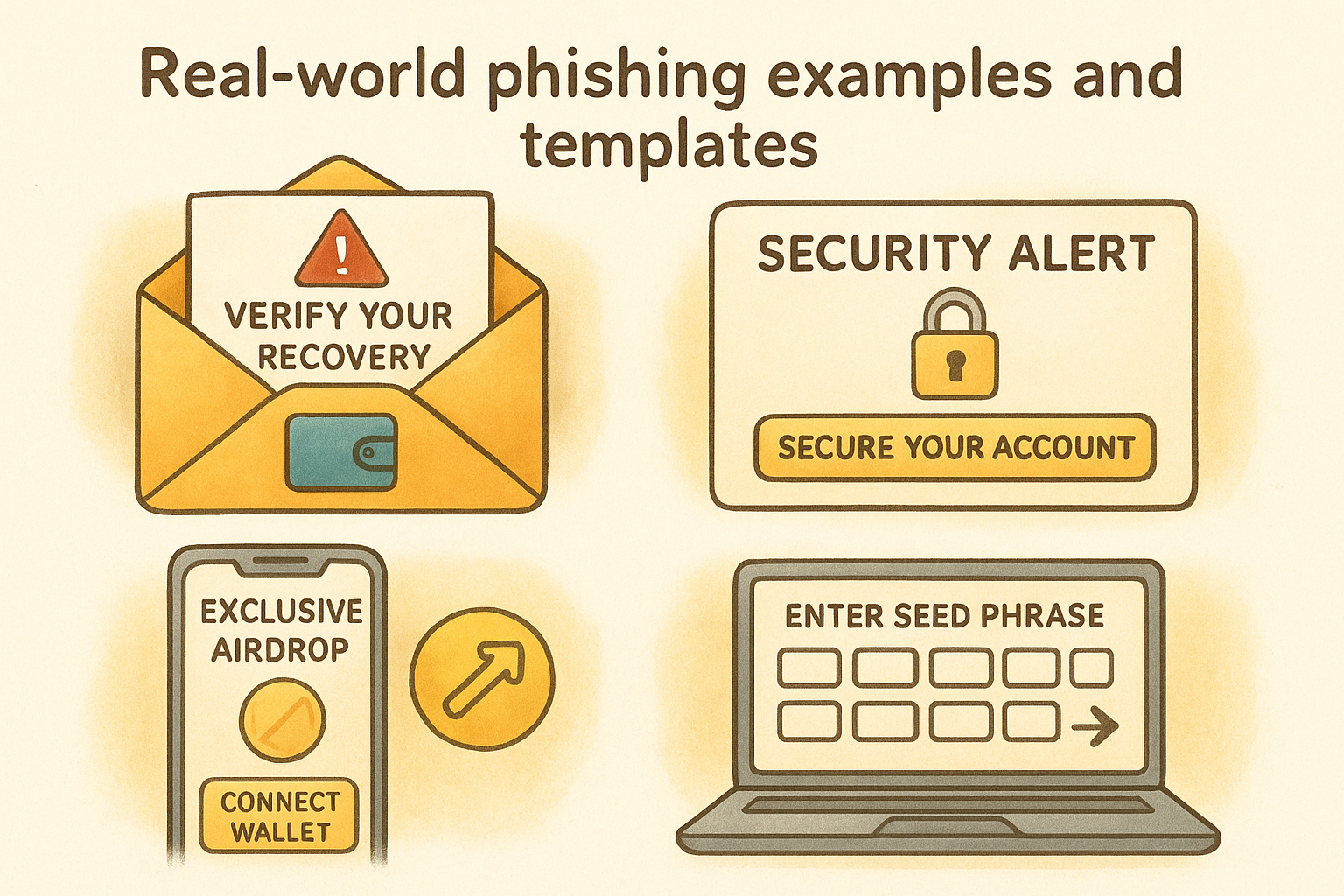
Understanding the phishing attack meaning becomes concrete when you see actual templates and tactics attackers use against crypto holders. These real examples reveal common patterns you'll encounter, and recognizing these structures helps you identify threats before clicking malicious links or entering sensitive information. Scammers recycle proven templates across thousands of attacks because they consistently work against unsuspecting victims.
Fake wallet recovery emails
MetaMask and Ledger users frequently receive emails claiming their recovery phrase needs verification or that their wallet requires an urgent security update. These messages use official logos, professional formatting, and urgent language like "Your wallet will be locked in 48 hours unless you verify ownership." The phishing page mimics the real wallet interface perfectly, requesting your 12-word or 24-word seed phrase under the guise of security.
A typical template reads: "We detected unusual activity on your wallet. Click here to verify your recovery phrase and prevent account suspension." The link leads to a site like metamask-secure.com instead of metamask.io, a subtle difference most people miss when clicking quickly.
Real wallet companies never ask for your seed phrase through email, messages, or any other communication method.
Compromised exchange alerts
Attackers send fake security notifications pretending to be from Coinbase, Binance, or Kraken, claiming someone attempted to access your account from a new location. The message includes a "Secure Your Account" button linking to a cloned login page that captures your username, password, and two-factor authentication code in real-time. Scammers immediately use these credentials to access your actual exchange account and withdraw funds.
These emails arrive shortly after legitimate security alerts from real exchanges, training you to expect such messages and reducing your skepticism when fake versions appear in your inbox.
Malicious airdrop notifications
You receive messages announcing "exclusive airdrops" of new tokens requiring you to connect your wallet to claim them. The phishing site requests wallet connection approval, but the smart contract you're actually signing grants unlimited access to your funds rather than distributing tokens. Within minutes of approval, attackers drain your entire wallet balance.
Discord and Telegram remain primary channels for these scams, with attackers impersonating project administrators or creating fake announcement channels. The template promises "1,000 free tokens" but requires immediate action before the "limited supply" runs out, creating artificial urgency that bypasses your normal caution.
How to spot phishing fast
Recognizing phishing attempts quickly requires developing specific observation habits that become second nature with practice. Speed matters because attackers design their scams to exploit the few seconds between seeing a message and clicking a link. Understanding the phishing attack meaning includes knowing the red flags that appear consistently across different attack types, allowing you to identify threats in real-time before making dangerous mistakes.
Check the sender's address closely
The sender's email address or message origin reveals most phishing attempts immediately when you examine it carefully. Hover over the sender's name without clicking to see the actual email address, which almost always differs from the displayed name. Legitimate companies use consistent domain names, while phishing emails come from suspicious addresses like support@metamask-secure.com instead of the real domain metamask.io.
Domain spoofing techniques include replacing letters with numbers (binance.com becomes binance1.com), adding extra words (coinbase-support.com), or using different top-level domains (ledger.co instead of ledger.com). You need to verify every single character in the domain name, because attackers know that most people glance quickly without careful inspection.
Legitimate crypto companies always send emails from their official domain, and you can verify correct domains by typing them manually into your browser rather than trusting links.
Look for urgency and pressure tactics
Phishing messages create artificial deadlines and emergency scenarios that push you toward immediate action without verification. Attackers use phrases like "verify within 24 hours," "suspicious login detected," or "account will be suspended" because they need you to bypass your normal caution. Real companies rarely demand instant responses to security issues and typically provide multiple contact methods for verification.
Language quality often exposes phishing attempts through awkward phrasing, grammatical errors, or generic greetings like "Dear User" instead of your actual name. Professional organizations employ editors and quality control, while phishing operations prioritize volume over polish.
Verify URLs before clicking
Inspect every link before clicking by hovering over it to reveal the actual destination URL in your browser's status bar. The displayed text might say "metamask.io/verify" while the real link points to metamask-security.tk or another completely different domain. This verification takes three seconds but prevents compromise.
Shortened URLs through services like bit.ly hide the real destination and should raise immediate suspicion in any message claiming to be from official sources. Legitimate wallet providers and exchanges never hide their URLs behind link shorteners in security-related communications.
How to prevent phishing attacks
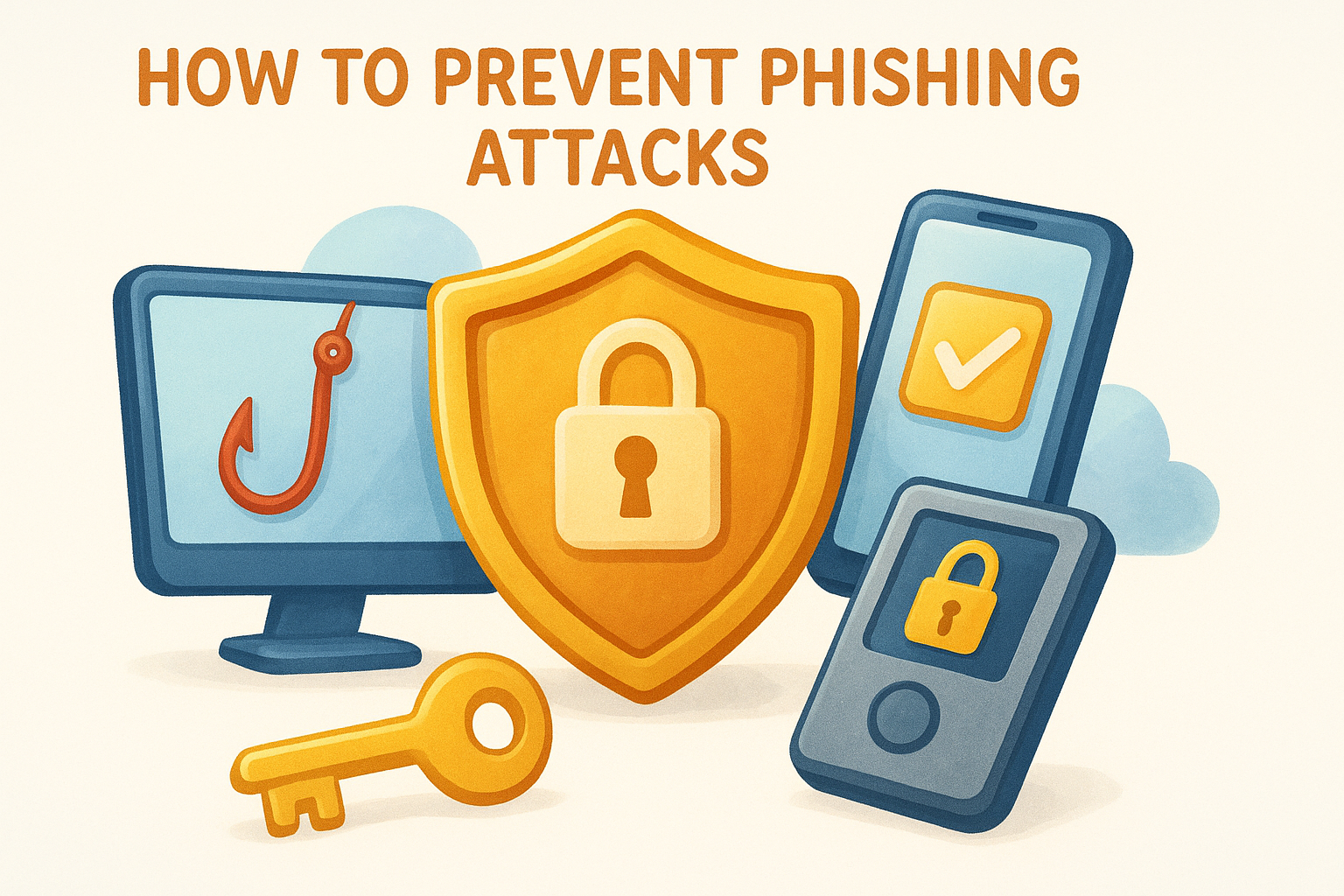
Prevention requires implementing multiple layers of defense that work together to protect your cryptocurrency holdings. Understanding the phishing attack meaning helps you realize that no single security measure stops all attacks, but combining proper tools, verification habits, and secure practices creates barriers attackers struggle to overcome. Your prevention strategy should focus on eliminating opportunities for phishing attempts to reach you and reducing the damage when they inevitably do.
Use hardware wallets for maximum protection
Hardware wallets keep your private keys completely offline, making them immune to phishing attacks that rely on capturing credentials through fake websites or malicious software. When you store crypto on a hardware device like Ledger or Trezor, attackers cannot access your funds even if they trick you into visiting a phishing site and entering your login credentials. The worst outcome becomes a failed transaction attempt rather than complete wallet drainage.
Physical confirmation on the device itself provides an additional safeguard. Every transaction requires you to manually approve details on the hardware wallet's screen, preventing malicious smart contracts or hidden transfers from executing without your explicit knowledge. This verification happens on the secure device rather than your potentially compromised computer.
Enable all available security features
Two-factor authentication using authenticator apps rather than SMS protects your accounts even when phishing attacks capture your password. SMS-based codes remain vulnerable to SIM swapping attacks, while app-based authenticators generate codes locally on your device that attackers cannot intercept remotely. You should enable this protection on every exchange, wallet service, and crypto-related account you maintain.
Your security settings should assume attackers already have your password, because phishing makes credential theft trivially easy.
Withdrawal whitelists on exchanges create mandatory waiting periods before funds can move to new addresses. Even if attackers compromise your account through phishing, this feature delays withdrawals for 24 to 48 hours, giving you time to detect the breach and lock your account before money disappears.
Verify everything manually
Type URLs directly into your browser instead of clicking links in emails, messages, or social media posts. This simple habit eliminates the primary phishing vector by ensuring you always land on legitimate websites rather than convincing clones. Bookmark frequently used sites and access them exclusively through your saved bookmarks rather than search results, which attackers can manipulate through sponsored ads pointing to phishing pages.
Contact companies through official channels listed on their verified websites when you receive suspicious messages claiming to need urgent action. Real security issues will remain accessible through proper support channels, while phishing attempts disappear when you refuse to engage through the attacker's chosen method.
What to do after a phishing attempt
Discovering you clicked a phishing link or entered credentials into a fake site triggers immediate panic, but your response in the next few minutes determines whether you lose everything or minimize damage. Acting fast transforms a potential disaster into a contained security incident with minimal losses. Understanding the phishing attack meaning includes knowing exactly which steps to take the moment you realize you've been targeted, because attackers move quickly once they have access.
Take immediate action
Disconnect your device from the internet immediately by turning off Wi-Fi and unplugging Ethernet cables. This step prevents malware from transmitting stolen data or receiving commands from attackers. Your priority shifts to stopping ongoing damage rather than investigating what happened, because every second of connectivity gives scammers more time to drain accounts or spread malicious software.
Close all browser windows and log out of every crypto-related account you can access safely. Do not attempt to transfer funds or make transactions until you've secured your accounts, as rushing could trigger additional security flags or complete compromises the attacker initiated.
Time matters more than perfect execution when stopping phishing attacks, because attackers begin stealing funds within minutes of capturing credentials.
Secure your accounts and assets
Change passwords on every account potentially compromised, starting with email accounts that control password resets for other services. Use a different, secure device if possible, as your primary computer might contain keylogging malware. Create completely new passwords rather than slight variations of old ones, and enable two-factor authentication immediately if you hadn't already.
Move any remaining cryptocurrency from compromised wallets to new addresses with freshly generated keys. Do not reuse seed phrases or private keys from affected wallets, even if you changed passwords. Generate entirely new wallets on clean devices and transfer funds there before attackers drain your original holdings.
Monitor and document everything
Check your transaction history across all wallets and exchanges for unauthorized transfers or approvals. Document everything with screenshots, including the phishing message, fake URLs, and any unusual account activity. This evidence helps when reporting to authorities and provides valuable information for preventing future attacks.
Review smart contract approvals using blockchain explorers to identify malicious permissions granted to attacker addresses. Revoke any suspicious approvals immediately through platforms that manage token permissions, as these often persist even after changing passwords.
Report the attack
Report phishing attempts to the impersonated company through their official channels, as most platforms maintain dedicated abuse teams. File reports with the Federal Trade Commission and Internet Crime Complaint Center, providing all documentation you collected. These reports contribute to tracking phishing campaigns and sometimes help recover stolen funds when attackers use traceable methods.
Next steps to stay safer
Protecting your cryptocurrency requires understanding the phishing attack meaning and implementing defenses before attacks reach your inbox. You've learned the tactics scammers use, the red flags that expose their attempts, and the immediate actions that prevent losses. Now you need to apply this knowledge consistently across every device and account you use for digital assets.
Start by auditing your current security setup today. Enable two-factor authentication, bookmark legitimate sites, and consider hardware wallets for significant holdings. These steps cost nothing but attention and create barriers attackers cannot easily overcome through social engineering alone.
Security education continues beyond this guide. At FinTech Dynasty, we provide detailed comparisons of hardware wallets, practical tutorials for self-custody, and ongoing updates about emerging threats targeting crypto holders. Your journey toward truly secure digital wealth requires both knowledge and the right tools to protect what you've built.