

What Is Typosquatting? Examples, Risks, And How To Avoid
One mistyped letter in a URL could cost you your entire crypto portfolio. That's not an exaggeration, it's exactly how typosquatting works. Attackers register domain names that closely resemble legitimate websites, banking on the fact that you'll make a simple keyboard slip. When you land on their fake page, they're ready to steal your credentials, install malware, or drain your wallet.
For cryptocurrency holders, this threat hits harder than most. Unlike traditional banking, there's no customer service hotline to call when someone tricks you into entering your seed phrase on a fraudulent site. Self-custody means self-responsibility, and that includes knowing how to spot these traps before you fall into them. At FinTech Dynasty, security education isn't optional, it's the foundation of protecting your digital wealth.
This article breaks down what typosquatting is, how criminals use it, real examples you should know about, and the key differences between typosquatting and similar schemes like cybersquatting. More importantly, you'll learn practical steps to protect yourself every time you type a crypto-related URL.
Why typosquatting matters for crypto holders
Cryptocurrency users face unique exposure to typosquatting because the entire ecosystem relies on URLs you type manually. You navigate to exchanges to trade, hardware wallet sites to update firmware, DeFi platforms to connect your wallet, and blockchain explorers to verify transactions. Every single URL represents a potential attack vector, and criminals know exactly which sites you're likely to visit.
The irreversible nature of crypto transactions
Traditional banking fraud offers some protection through chargebacks and insurance. If someone tricks you into logging into a fake Bank of America site, you can contact the bank and potentially reverse fraudulent transfers. Cryptocurrency eliminates that safety net entirely. When you enter your seed phrase on a counterfeit hardware wallet site or approve a malicious smart contract connection, the theft happens instantly and permanently.
Once your crypto leaves your wallet through a typosquatting attack, no company, government, or blockchain can reverse it.
Understanding what is typosquatting becomes critical because attackers specifically register domains that mimic legitimate crypto services. They purchase variations of popular exchange names, wallet providers, and DeFi protocols, then wait for you to make a typing mistake. The financial stakes are considerably higher than most online scams because your entire portfolio sits behind a single set of credentials.
High-value targets and no safety net
Crypto holders store substantial wealth in digital form, making them premium targets. Attackers don't waste time on low-value schemes when they can potentially drain thousands or millions from a single victim. They know that anyone searching for hardware wallet setup instructions or exchange login pages likely holds significant assets worth stealing.
Your interaction with crypto platforms also requires constant vigilance that traditional banking doesn't demand. You manually type URLs for multiple services throughout the day: checking portfolio balances, executing trades, moving assets between wallets, participating in staking protocols. Each action creates an opportunity for a typo, and attackers have registered thousands of domain variations across every major crypto service. They're counting on probability, knowing that eventually someone will type "bianance.com" instead of "binance.com" or "metmask.io" instead of "metamask.io."
This threat landscape exists specifically because self-custody transfers all security responsibility to you. No intermediary reviews your transactions or flags suspicious activity before execution.
How typosquatting works and how it differs
Attackers begin by identifying high-traffic websites that users frequently type manually into their browsers. They then register domain names that mirror these legitimate sites with minor variations, such as common misspellings, adjacent keyboard characters, or missing letters. The domains sit idle until you make a typing error and land on their fraudulent page. Your browser displays what appears to be the correct website, complete with copied logos, layouts, and styling that perfectly replicate the real platform.
The mechanics of domain registration
Domain registrars allow anyone to purchase available URLs for minimal cost, often just a few dollars per year. Criminals exploit this by bulk-registering hundreds of variations for popular crypto services before legitimate companies can claim them. They target predictable mistakes like doubled letters (biitcoin.com), transposed characters (coinbsae.com), or substituted numbers (b1nance.com). Once registered, these domains remain active indefinitely, waiting for your accidental visit.
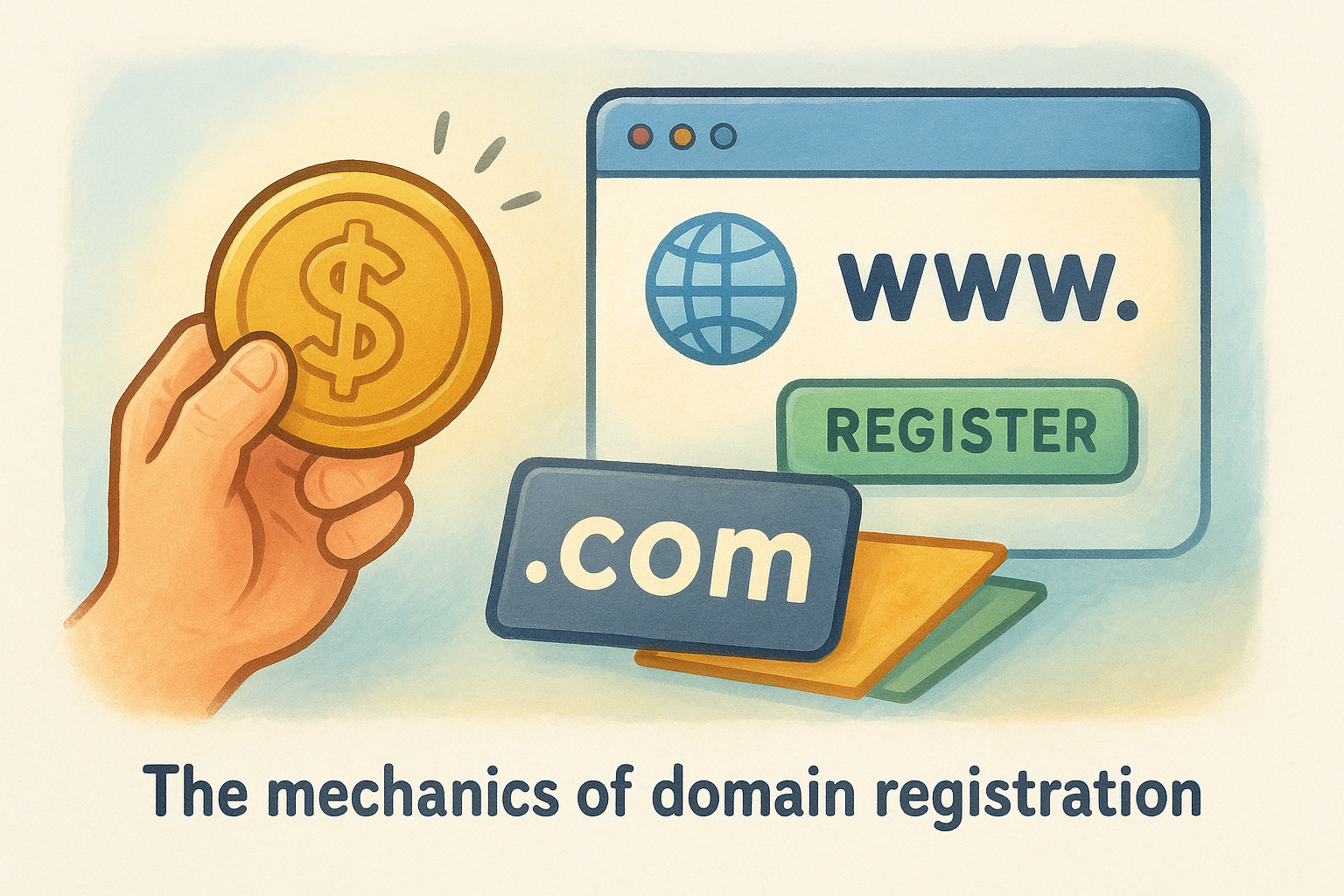
Typosquatting costs attackers almost nothing to maintain while potentially generating millions in stolen assets.
Key differences from cybersquatting
Understanding what is typosquatting requires distinguishing it from cybersquatting, a related but different practice. Cybersquatters register exact brand names or trademarked terms as domains, then attempt to sell them back to the rightful owners for profit. They're not necessarily creating fake websites or stealing credentials, they're holding domains hostage. Typosquatting specifically targets user typing errors to redirect you to malicious clones designed for immediate theft. Cybersquatting involves legitimate domains used for ransom, while typosquatting uses misspelled variations for direct fraud.
Common patterns and real-world examples
Criminals follow predictable formulas when registering typosquatting domains because they know which mistakes you're likely to make. They study keyboard layouts, analyze common typos, and purchase domains based on statistical probability. The patterns repeat across every major crypto platform, from exchanges to wallet providers, making them easier to recognize once you understand their tactics.
Typical character substitutions
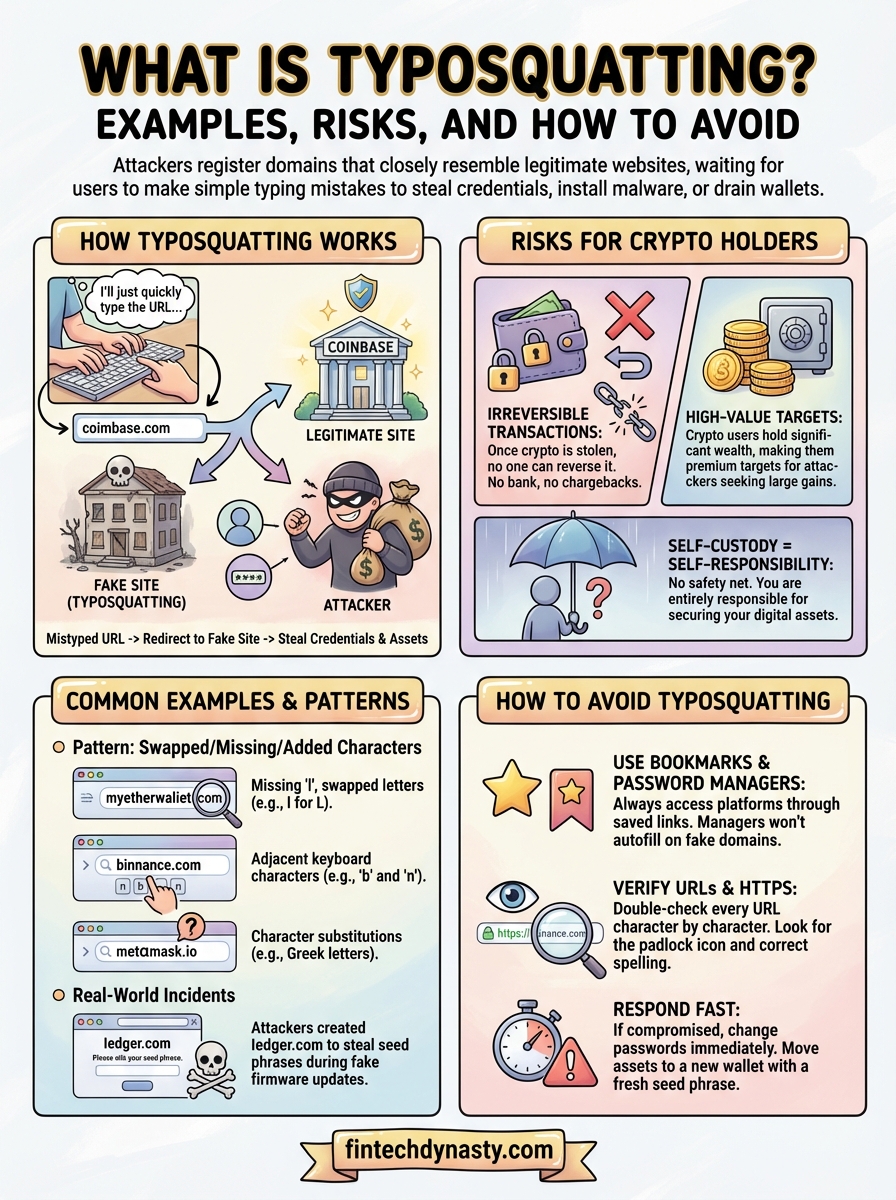
Attackers swap visually similar characters to create domains that look legitimate at first glance. They replace lowercase "L" with uppercase "i" (I), substitute zero for the letter "o", or add hyphens where none exist. You might see myetherwalet.com (missing an "l"), coinbase-login.com (added hyphen), or metαmask.io (using a Greek alpha instead of "a"). Adjacent key mistakes represent another common pattern: binabce.com instead of binance.com, where "b" and "n" sit next to each other on standard keyboards.
Criminals know you're most likely to mistype when you're rushing to check prices or complete a transaction.
Documented cryptocurrency incidents
Real attacks demonstrate how devastating what is typosquatting becomes when combined with credential theft. In 2018, attackers registered myetherwaliet.com and collected Ethereum wallet credentials from users who missed the single transposed letter. The fake site mimicked MyEtherWallet's interface perfectly, resulting in multiple wallet drains before anyone reported the domain. Hardware wallet providers face similar threats: scammers created Iedger.com (replacing "l" with uppercase "i") to capture seed phrases during supposed firmware updates. Exchange typosquatting remains equally dangerous, with documented cases of binnance.com and krakon.com collecting login credentials that provided direct access to trading accounts.
Risks and warning signs to watch for
The consequences of falling for typosquatting extend beyond simple credential theft. Attackers deploy multiple attack vectors through a single fraudulent domain, from capturing your login details to installing persistent malware on your device. Recognizing these threats before you interact with a suspicious site protects both your immediate assets and your long-term security posture.
Security certificate mismatches and URL inconsistencies
Your browser provides built-in protection through security certificates that verify a website's authenticity. Legitimate crypto platforms maintain valid HTTPS certificates issued by recognized authorities, while typosquatting domains often display certificate warnings or use self-signed certificates that trigger browser alerts. You'll notice the padlock icon appears different or missing entirely in the address bar. The URL itself reveals critical information: authentic sites maintain consistent spelling, proper domain extensions (.com, .io, .org), and exact character matches without substitutions or additions.
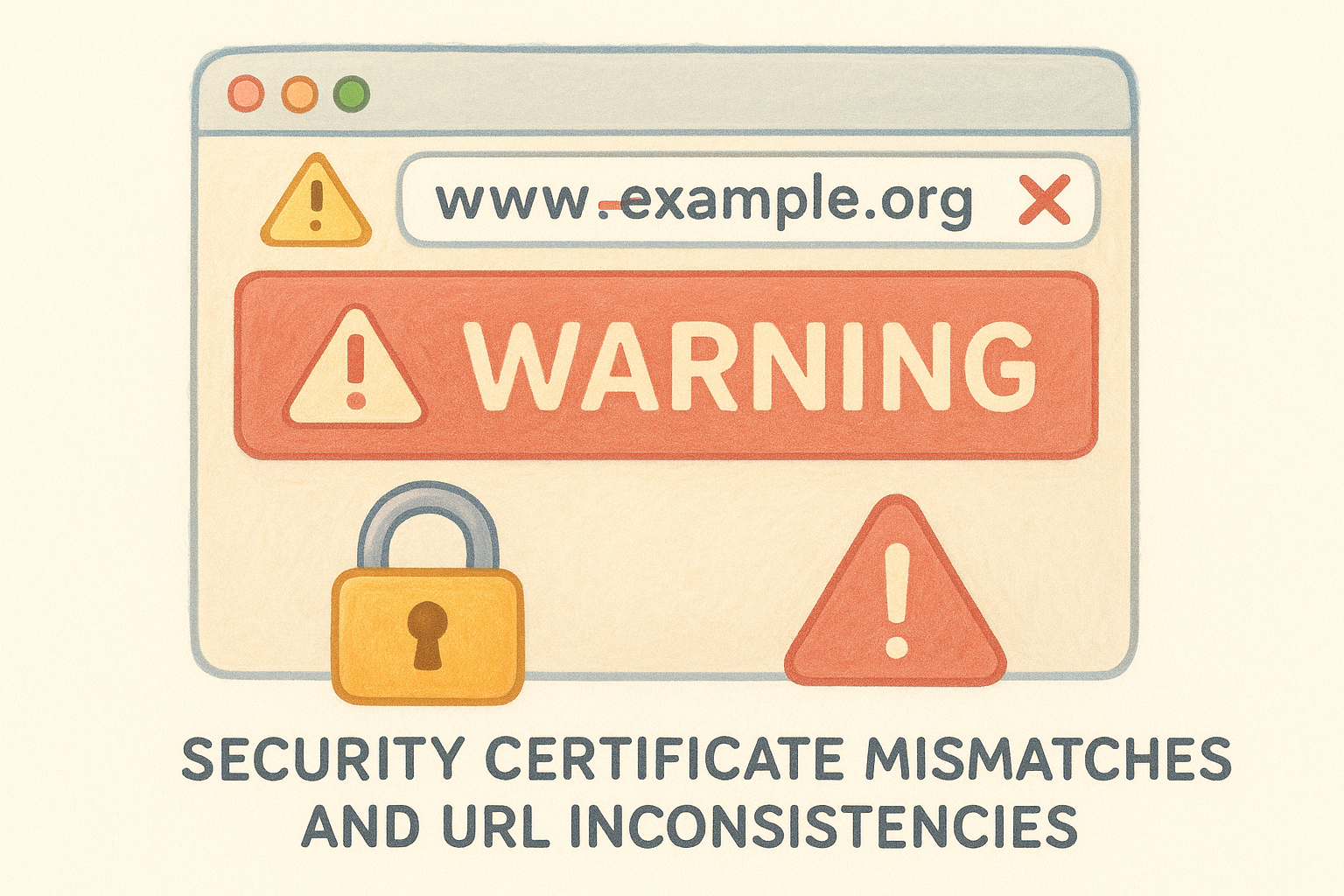
Certificate warnings represent your first line of defense. Never proceed past them when accessing financial platforms.
Behavioral red flags on fraudulent sites
Fraudulent pages exhibit subtle differences from legitimate platforms that become obvious once you know what to watch for. Forms request unnecessary information like complete seed phrases (which real sites never ask for), request immediate action through urgent language, or display broken links and formatting inconsistencies. Understanding what is typosquatting helps you recognize when attackers rush through cloning efforts, leaving behind visual artifacts like outdated logos, misaligned layouts, or placeholder text. Legitimate crypto services invest heavily in polished interfaces, while scam sites often contain spelling errors in footer text, broken images, or functionality that doesn't work as expected. These imperfections exist because criminals clone sites quickly and move on to the next target.
How to avoid typosquatting and respond fast
Prevention requires systematic habits that eliminate the opportunity for typing errors entirely. You can't rely on vigilance alone when attackers have registered thousands of domain variations across every platform you use. Building protective routines into your daily workflow reduces your risk to near zero while maintaining the convenience you need for regular crypto management.
Use bookmarks and password managers
Bookmark every legitimate crypto platform you use and access them exclusively through your saved links. This single habit eliminates manual typing entirely, removing the primary attack vector typosquatters depend on. Your browser's bookmark toolbar provides instant access to verified URLs without exposing you to typing mistakes. Password managers offer an additional layer of protection by storing correct URLs alongside your credentials and refusing to autofill on fraudulent domains. When your password manager doesn't recognize a site you think you've visited before, that mismatch serves as an immediate warning signal.
Bookmarked URLs never contain typos, and password managers only populate credentials on exact domain matches.
Verify before you enter credentials
Double-check the address bar before entering any sensitive information, even when you believe you've typed correctly. Look for HTTPS encryption, verify the exact spelling character by character, and confirm the domain extension matches what you expect. Understanding what is typosquatting means recognizing that attackers count on your assumption that you typed correctly.
Steps to take if you've been compromised
Act immediately if you realize you've entered credentials on a fraudulent site. Change your password on the legitimate platform within seconds, not minutes. Move your crypto assets to a new wallet with a fresh seed phrase if you entered recovery words on any suspicious domain. Speed matters because attackers often automate theft the moment they capture your information.
Final takeaways
Understanding what is typosquatting gives you the foundation to protect your cryptocurrency from one of the most preventable threats in the space. The attack requires nothing more than a single typing error on your part, but the consequences can permanently eliminate your digital wealth. Attackers invest minimal resources to register thousands of domain variations because they know probability works in their favor, eventually someone will mistype a URL and land on their fraudulent clone.
Your defense comes down to eliminating manual typing entirely through bookmarks and password managers, verifying URLs character by character before entering credentials, and responding within seconds if you realize you've been compromised. These habits cost you nothing but attention while providing complete protection against typosquatting schemes.
Security education forms the backbone of successful self-custody. Explore FinTech Dynasty's complete security guides to strengthen every aspect of your crypto protection strategy, from hardware wallet comparisons to advanced threat recognition.