

What Is Supply Chain Security? Risks, Types, Best Practices
Every hardware wallet you buy traveled through a chain of manufacturers, distributors, and shipping handlers before it reached your hands. If any single link in that chain is compromised, a tampered chip, modified firmware, a repackaged box, your private keys could be exposed before you even power the device on. This is why understanding what is supply chain security matters far more than most crypto holders realize.
Supply chain security refers to the set of practices, policies, and tools used to protect products and software from tampering, counterfeiting, or unauthorized modification as they move from origin to end user. It covers both physical goods and digital components, including the firmware and code that run inside the devices you trust with your assets. For anyone practicing self-custody, this isn't an abstract corporate concern, it's a direct threat to your wealth.
At FinTech Dynasty, we focus on the practical, technical side of protecting digital assets. That means going beyond wallet comparisons and into the security foundations that make those wallets trustworthy in the first place. This article breaks down the types of supply chain risks, real-world examples of how they've been exploited, and the best practices you can follow to verify that your security tools haven't been compromised before they ever reach your door.
Why supply chain security matters
Most people focus on securing their seed phrase and wallet password after setup, but the threat can exist long before you create your first wallet. If someone intercepts your hardware wallet during shipping, installs modified firmware at the manufacturer level, or substitutes a counterfeit device inside the original packaging, no amount of post-setup security will protect you. The attack already happened, and you have no way to detect it by looking at the box.
Understanding what is supply chain security forces you to think about trust differently. Instead of asking "is my wallet secure," you start asking who touched this device, who wrote this firmware, and how you can verify the answers to both questions. That shift in thinking is what separates a prepared crypto holder from one who discovers the problem only after funds are gone.
The weakest point in your security setup may not be anything you can change after purchase. It may be everything that happened before the device arrived.
Why hardware wallets are a high-value target
Hardware wallets are not random consumer electronics. They hold cryptographic keys that can directly control significant amounts of digital assets, which makes them a specific target for sophisticated attackers. A bad actor does not need to compromise a blockchain or hack an exchange if they can intercept the physical device you are planning to trust with everything.
Researchers have demonstrated that certain hardware wallet models could be compromised at the firmware level without breaking the physical seal, showing that even well-established brands are not immune to supply chain manipulation. Attackers who position themselves inside the distribution chain, whether as a third-party reseller, a shipping handler, or an unauthorized seller on a marketplace, gain physical access to a device before you do. That access window is all they need to install modified code or replace internal components.
Software supply chains carry equal risk
Physical tampering gets most of the attention, but software supply chains are attacked just as frequently and often at much greater scale. When a developer includes a third-party library in a wallet application, they are trusting not just that library but every dependency it relies on. A single malicious update pushed to one of those dependencies can reach thousands of end users within hours, with no visible warning.
The SolarWinds incident documented by CISA is the clearest real-world example of how devastating a software supply chain breach can be. Attackers inserted malicious code into a legitimate software update, which was then distributed automatically to thousands of organizations worldwide. Applied to the crypto context, a comparable attack on a wallet companion app or a firmware update mechanism could silently expose your private keys or redirect outgoing transactions without triggering any alert on your end.
What supply chain security includes
Supply chain security isn't a single tool or policy. It's a layered set of controls that covers every touchpoint a product or piece of code passes through before reaching you. Understanding what is supply chain security means recognizing that it spans both tangible hardware and the invisible software stack running inside it.
Physical hardware controls
The physical side focuses on confirming that components are authentic and that devices haven't been modified during manufacturing, storage, or shipping. For hardware wallets, this matters at every stage from the factory floor to your front door.
Key physical controls include:
- Tamper-evident packaging with seals that show visible signs of interference
- Factory-issued attestation certificates tied to the specific device serial number
- Secure boot sequences that verify firmware integrity before the device starts
- Verification portals where you can confirm authenticity using an on-device key
Software and firmware controls
Software supply chain security covers the full stack of code dependencies, build pipelines, and update delivery mechanisms that ship with or alongside a device. A wallet's firmware often relies on third-party cryptographic libraries, and each one introduces risk if an attacker pushes a malicious update upstream.
Every dependency your wallet firmware relies on is a potential entry point for an attacker who never needs physical access to your device.
Controls here include code signing and reproducible builds, which let independent researchers confirm that compiled binaries match the published source code. These practices are outlined in frameworks like NIST's Cybersecurity Framework and are now treated as baseline expectations by security-conscious manufacturers.
Third-party vendor relationships
No manufacturer builds everything in-house. Supply chain security also covers the vendor contracts, audits, and access controls that govern every external supplier involved in production, defining what security standards each partner must meet before touching a product that ends up in your hands.
If a chip supplier or distribution partner doesn't meet those same standards, that gap becomes your vulnerability too. Before trusting any device with your digital assets, verifying the full chain of custody from factory to delivery is a step that serious supply chain programs always address.
Common supply chain risks and attacks
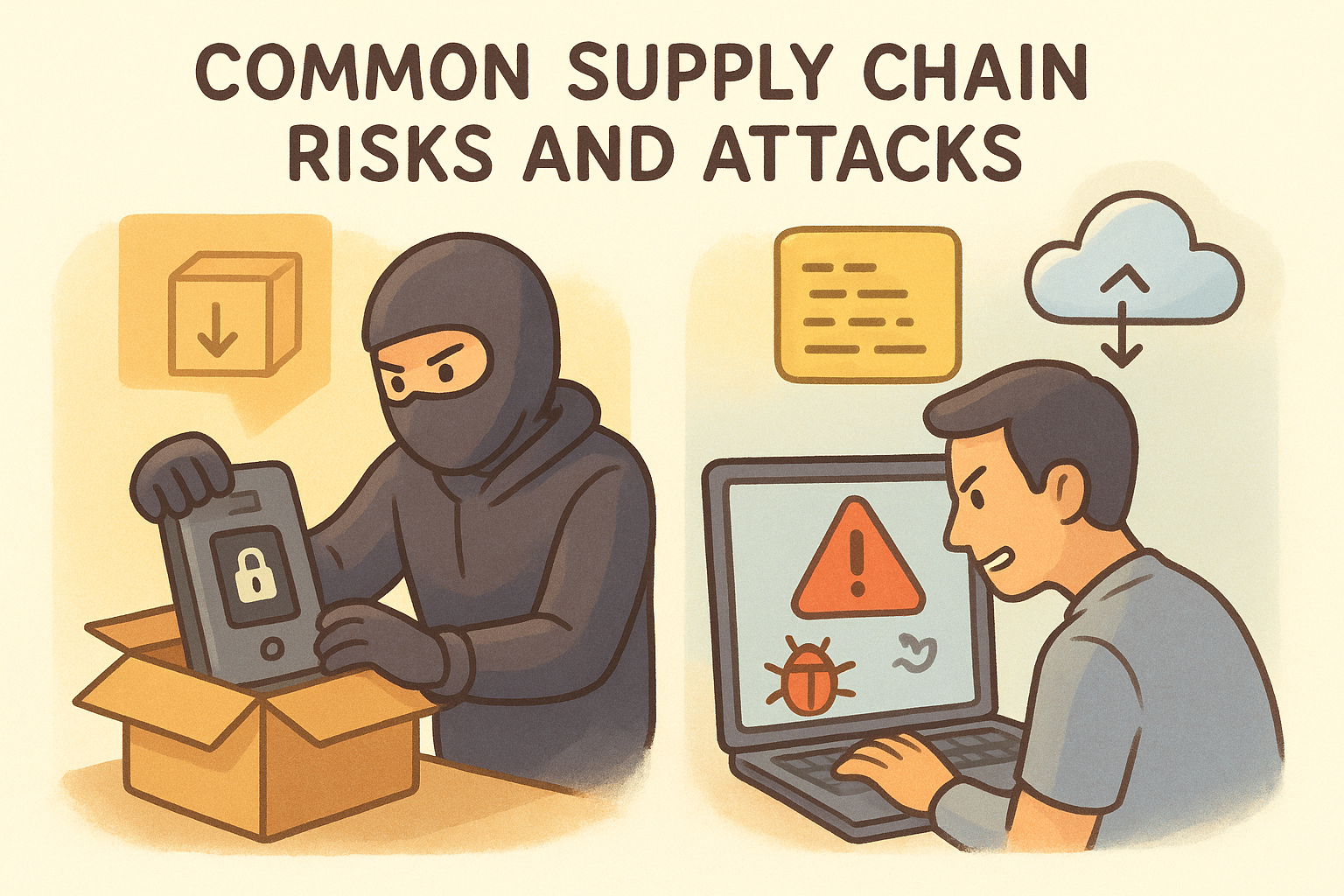
Understanding what is supply chain security starts with knowing exactly what attackers target and how. The risks fall into two broad categories: physical attacks that happen to hardware in transit or at the point of manufacture, and software-based attacks that exploit trusted update channels and code dependencies. Both types can reach you without triggering any visible alert, which makes them unusually difficult to detect and especially dangerous for crypto holders.
Physical interception and counterfeiting
The most direct physical risk is interception. An attacker who gains access to a hardware wallet during shipping or storage can open the device, modify its firmware or internal components, and reseal the packaging to look untouched. A second, related threat is counterfeiting, where a low-cost device is manufactured to look identical to a trusted brand and sold through unofficial resellers or third-party marketplaces. You receive what appears to be a legitimate product, but the device was designed from the start to steal your keys.
Buying a hardware wallet from an unofficial source is one of the highest-risk decisions a crypto holder can make, regardless of price.
Both scenarios share a common outcome: you initialize a compromised device and hand your private keys directly to an attacker without realizing it.
Software dependency and update attacks
Software-based supply chain attacks target the code that powers devices and applications rather than the physical hardware itself. Attackers inject malicious code into a trusted dependency or compromise a firmware update server, then distribute the infected update through the same channel users already trust. Because the update appears to come from a verified source, most users install it without hesitation.
This type of attack scales far beyond physical interception. A single compromised library can affect every application that depends on it, pushing a silent threat to thousands of users in a single release cycle. Wallet companion apps and browser extensions that pull from external repositories face this risk constantly.
How to secure a supply chain in practice
Knowing what is supply chain security is only useful if you translate that knowledge into specific, repeatable actions. As an end user, you have more control than you might think. A handful of targeted habits and verification steps significantly reduce your exposure to both physical and software-based supply chain threats before your device ever handles a private key.
Buy directly and verify on arrival
The single most effective step you can take is purchasing hardware wallets directly from the manufacturer's official website rather than from third-party resellers, marketplaces, or auction platforms. Every intermediary you skip removes a potential point of compromise in the physical chain. Once the device arrives, inspect the packaging for tamper-evident seal integrity and use the manufacturer's official verification tool, typically an on-device attestation check or QR-based portal, to confirm the device is genuine before you initialize it.
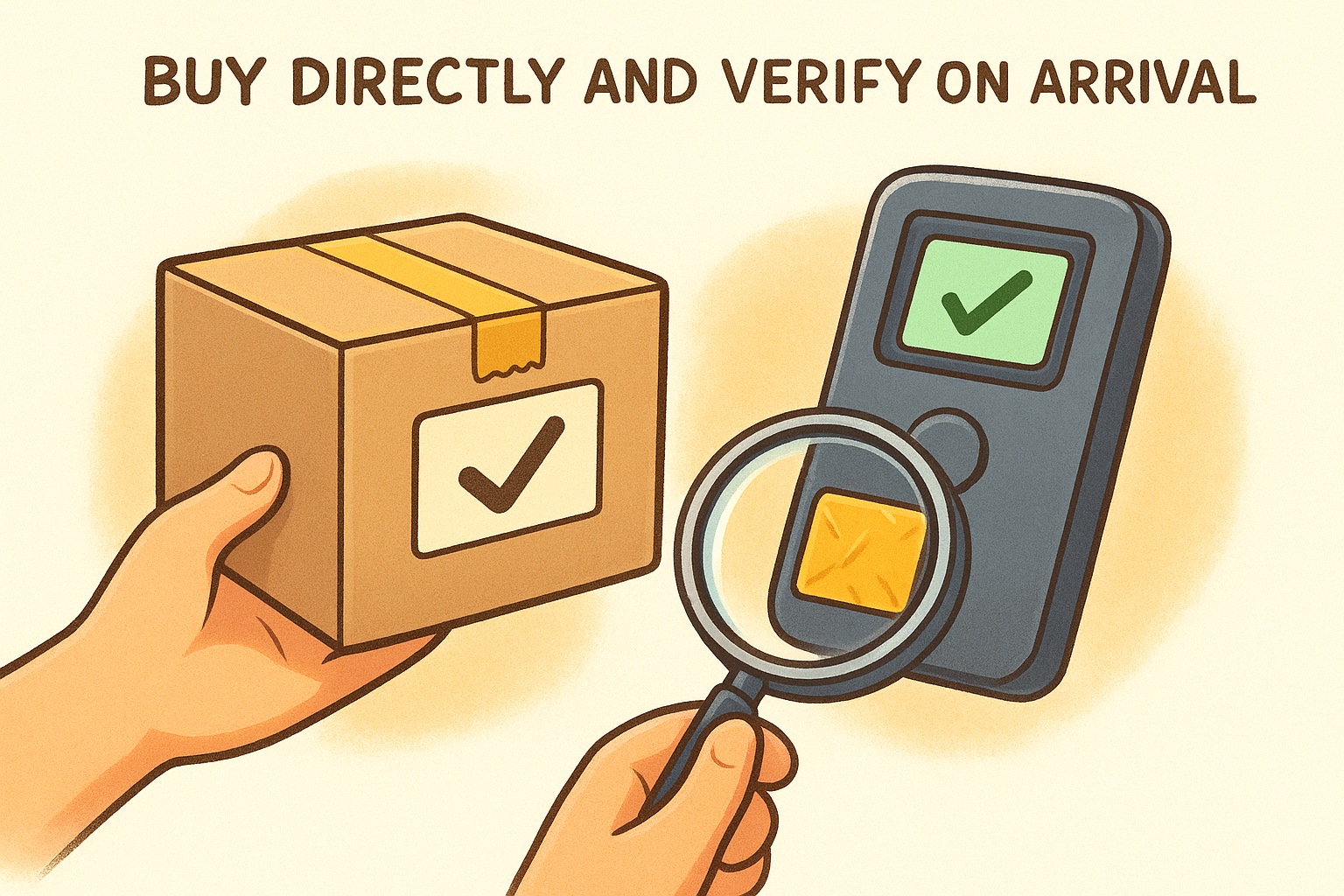
- Purchase only from the official manufacturer store
- Check tamper seals before opening
- Run the manufacturer's device attestation process
- Never use a device that arrived pre-initialized or with a seed phrase already written inside
A device that arrives with a seed phrase pre-filled is not a convenience feature. It is a confirmed compromise.
Keep firmware and software updated through official channels
Software supply chain attacks frequently target outdated firmware or companion apps that haven't received security patches. Update your wallet firmware regularly, but always download updates directly from the manufacturer's official site or through their verified application. Avoid clicking links in emails or social media posts that claim to offer firmware updates, as attackers commonly use those channels to distribute modified builds.
Verify firmware signatures where your device supports it. Manufacturers like Ledger and Trezor publish signed release notes and checksums you can compare against your downloaded files before installing, giving you a concrete way to confirm authenticity before any update touches your device.
Standards, audits, and supplier requirements
Recognizing what is supply chain security means recognizing that good intentions aren't enough. Formal standards and structured audits give manufacturers and vendors a measurable way to demonstrate that their security controls actually work, rather than simply claiming they do. Without these benchmarks, every link in the chain operates on trust alone, and trust without verification is just risk with a friendly name.
Industry standards that define the baseline
Two major frameworks shape how organizations approach supply chain security at a technical level. NIST SP 800-161, published by the National Institute of Standards and Technology, provides a comprehensive set of controls specifically designed for managing cybersecurity risks across supply chains. The ISO/IEC 27001 standard takes a broader approach, covering information security management systems across an entire organization, including the vendor relationships that feed into it.
Both frameworks share a common requirement: documented controls that are testable and verifiable over time. For hardware wallet manufacturers, alignment with these standards signals that their security posture isn't self-reported, it's measurable against a published benchmark.
Audits and supplier vetting
Audits translate those standards from documents into verified reality. A third-party security audit examines whether a manufacturer's actual processes match the controls they claim to have in place, covering everything from chip sourcing to firmware signing procedures. Reputable hardware wallet makers publish audit results or subject their devices to independent security research, giving you concrete evidence to evaluate.
An audit result you can read is worth far more than a security claim you can only take at face value.
Supplier vetting extends that scrutiny outward to every vendor a manufacturer relies on. If a chip supplier or firmware library provider hasn't met equivalent security requirements, that gap flows directly into the final product you receive. Demanding transparency across the full supplier chain is what separates security programs that hold under pressure from ones that collapse at the first weak link.
Key takeaways
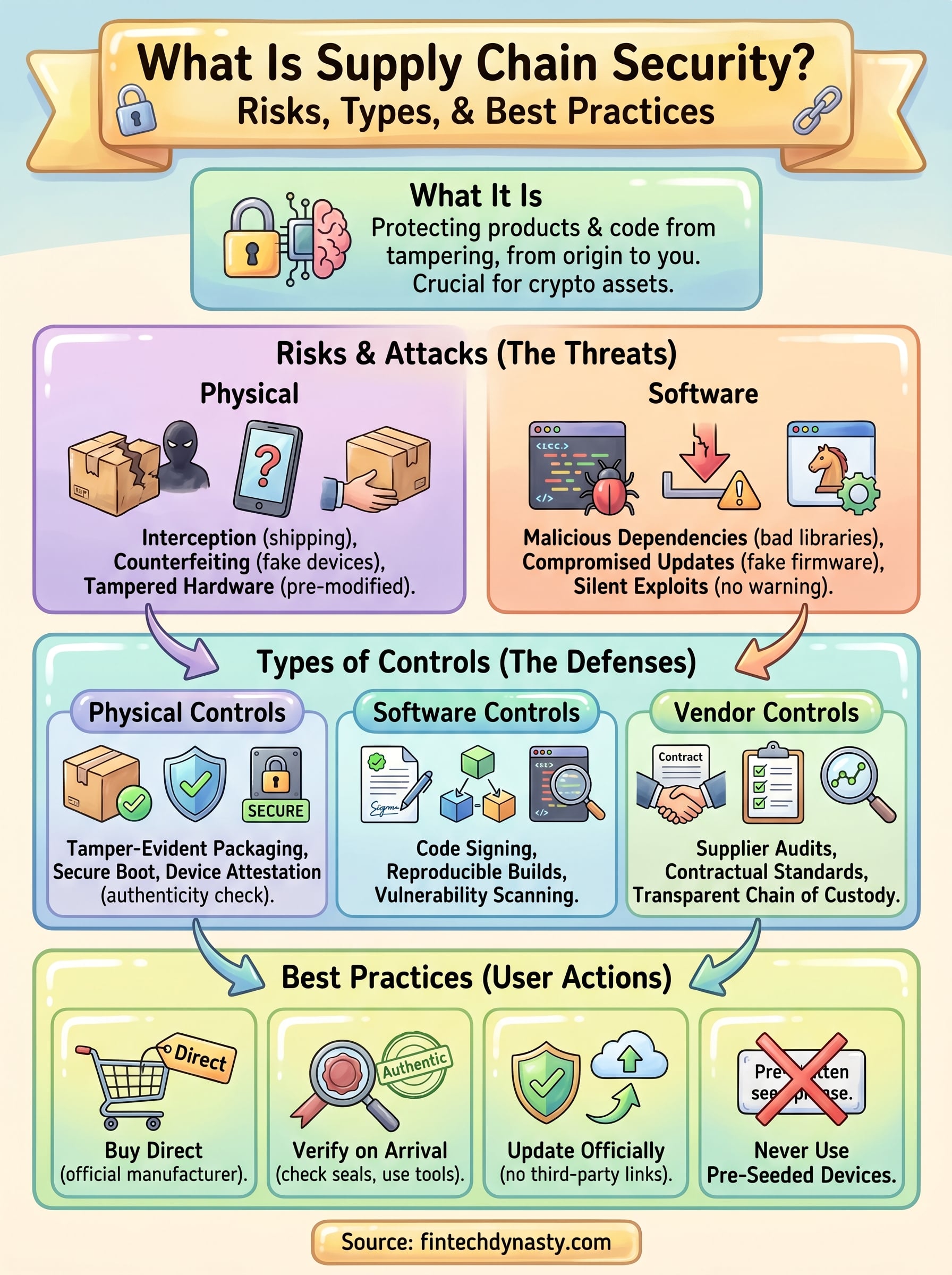
What is supply chain security, in practical terms? It's the discipline of verifying every touchpoint a device or piece of code passes through before it reaches you, and building habits that make that verification routine rather than optional. The threats are real: physical interception, counterfeit devices, compromised firmware updates, and malicious dependencies all target crypto holders specifically because the payoff is direct and immediate.
Your best defenses are straightforward: buy directly from manufacturers, verify devices on arrival, update firmware only through official channels, and understand the standards and audits that separate trustworthy hardware from risky alternatives. No single step eliminates all risk, but combining them closes most of the gaps attackers rely on.
Building that knowledge takes time, which is why structured learning matters. If you want a stronger foundation in crypto security, from understanding private keys to choosing the right cold storage setup, the FinTech Dynasty crypto education course gives you practical, no-hype lessons designed to help you protect your assets with confidence.