

Supply Chain Security Definition: Physical & Software Risks
A supply chain security definition covers more ground than most people expect. It's not just about locked warehouses and tamper-proof shipping containers. It extends into code repositories, firmware updates, third-party software libraries, and every handoff point where a product or service passes from one entity to another. If any single link in that chain is compromised, everything downstream inherits the risk.
This matters directly to anyone holding cryptocurrency in self-custody. When you buy a hardware wallet, a Ledger, Trezor, Tangem, or any other device, you're trusting that the product arrived exactly as the manufacturer intended. No modified firmware, no pre-generated seed phrases, no physical tampering. That trust depends entirely on the integrity of the supply chain behind it. At FinTech Dynasty, we evaluate hardware wallets and security tools with this reality front and center, because a secure device is only as secure as the path it took to reach you.
This article breaks down what supply chain security actually means across both physical and software contexts. You'll learn how risks differ between traditional logistics and digital dependencies, why third-party vendors create hidden vulnerabilities, and what core principles separate a resilient supply chain from a fragile one. Whether you're assessing a cold storage device or trying to understand how software supply chain attacks happen, this guide gives you the full picture.
Why supply chain security matters now
Supply chains have always carried risk, but the scale and complexity of modern dependencies have pushed that risk to a new level. Every organization today, from a Fortune 500 company to an individual buying a hardware wallet online, relies on a web of manufacturers, distributors, software vendors, and logistics providers. When any one of those parties fails to maintain proper controls, the consequences travel fast and far. Grasping the full supply chain security definition isn't just an academic exercise anymore. It's a practical requirement for anyone who wants to protect assets, digital or otherwise, in the real world.
High-profile attacks changed the baseline
The 2020 SolarWinds incident reshaped how security professionals think about trusted software. Attackers compromised the build process of a widely used IT monitoring platform, embedding malicious code into a legitimate software update that was then distributed to roughly 18,000 organizations, including U.S. federal agencies. The attack succeeded not because someone broke into a target network directly, but because the attackers poisoned the supply chain at its source.
When attackers compromise a trusted vendor's update process, every downstream customer becomes a victim without ever making a mistake of their own.
That attack follows a pattern that has become increasingly common. Third-party access and software dependencies are now the preferred attack surface because they let a single compromise scale across thousands of targets simultaneously. The same logic applies to hardware. Counterfeit components, tampered firmware, and gray-market devices have all appeared in documented real-world investigations.
Why hardware wallets face the same pressure
If you're using a hardware wallet to protect cryptocurrency, you're sitting inside this exact problem. The device you hold passed through a manufacturer, a logistics chain, and often a reseller before it reached you. Each of those steps is a potential intervention point. Researchers have demonstrated that pre-modified hardware wallets sold through unofficial channels can ship with firmware that silently leaks private keys or seed phrases.
Your personal threat model overlaps significantly with the threat model facing large enterprises. The U.S. Cybersecurity and Infrastructure Security Agency (CISA) has consistently flagged third-party risk as one of the top vulnerabilities across both public and private sector organizations. Trust the wrong supplier, and your security posture collapses regardless of how careful you are after the device arrives.
The acceleration of digital dependencies
Modern products rarely come from a single source. Software libraries, cloud services, and firmware components are often assembled from dozens of independent contributors, each carrying their own security posture and potential weaknesses. Open-source packages can be altered by malicious actors before they're incorporated into a finished product. A hardware wallet's companion app might pull in a third-party library that hasn't been audited in years.
One weak link can undermine an otherwise solid security setup, and this is exactly why supply chain security demands attention right now. The number of links in any given chain has grown faster than most organizations' and individuals' ability to verify each one. Awareness is the first line of defense, and that starts with understanding what you're actually trusting every time you install an update, open a package, or plug in a new device.
What counts as a supply chain
Most people picture shipping containers and freight trucks when they hear "supply chain," but a complete supply chain security definition covers far more than physical logistics. A supply chain is any sequence of people, processes, organizations, and technologies that contribute to delivering a finished product or service to an end user. Every handoff point in that sequence, whether physical or digital, is a link that can either hold firm or fail.
Physical supply chains
A physical supply chain starts at raw material extraction and ends when a product reaches your hands. For a hardware wallet, that chain includes semiconductor fabrication, component assembly, firmware installation, packaging, warehousing, and last-mile delivery. Each of those stages involves different vendors, workers, and facilities operating under their own security standards.
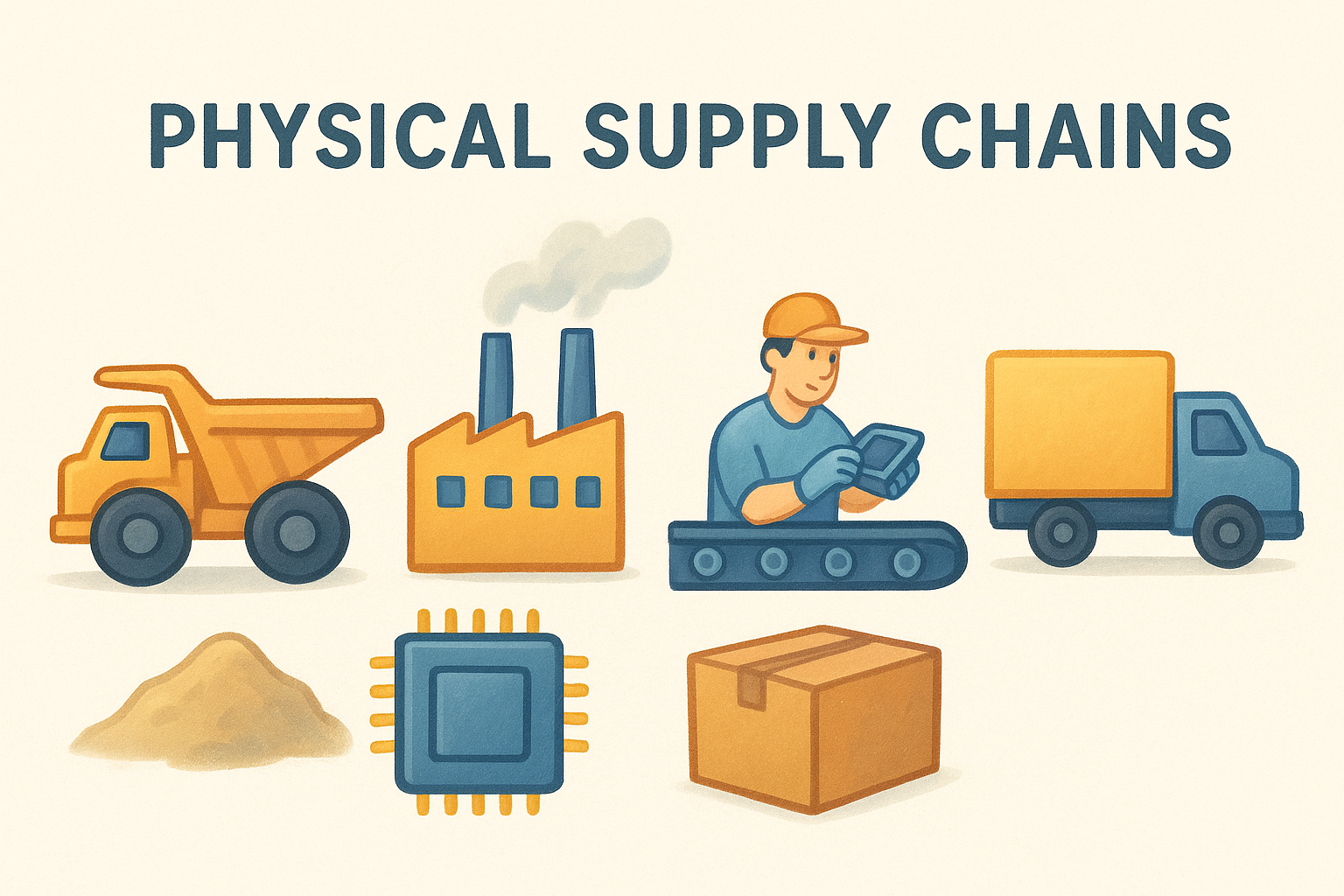
The device you receive is only as trustworthy as the least-controlled step in that entire production and delivery sequence.
What makes this complicated is that manufacturers rarely control every stage themselves. A company like Ledger or Trezor may design the hardware and write the firmware, but they depend on third-party chip manufacturers, contract assemblers, and independent distributors to bring that device to market. Each external party introduces variables that the original manufacturer cannot fully audit or guarantee.
Digital and software supply chains
A digital supply chain is the equivalent sequence for software. When a developer builds an application, they typically pull in open-source libraries, third-party APIs, cloud infrastructure, and external code dependencies that they did not write themselves. The hardware wallet companion app you install on your phone is a good example. That app likely contains components from multiple contributors, each with their own update cycles and potential vulnerabilities.
Firmware updates follow the same logic. When a hardware wallet manufacturer pushes an update to your device, that update passed through a build pipeline, possibly a code signing process, and a distribution server before it reached you. If any of those steps was compromised, the update itself becomes the attack vector. Understanding where your software originates and how it travels to you is just as important as securing the physical device in your hand.
Physical supply chain risks and controls
Physical supply chain risks exist at every stage where a product changes hands. For anyone purchasing a hardware wallet, the supply chain security definition applies the moment a device leaves the manufacturer's facility. Tampering can occur during assembly, packaging, shipping, or at the point of sale, and the result of each scenario is the same: a device that looks completely legitimate but carries a hidden compromise before you ever touch it.
Common physical threats to hardware integrity
Several documented attack types target hardware during transit and distribution. Pre-generated seed phrases represent one of the most straightforward methods: a bad actor opens the packaging, records the seed phrase already loaded on the device, reseals it, and waits for the buyer to deposit funds. Counterfeit devices are another well-known risk, where knockoff products mimic legitimate hardware at a surface level but contain modified components designed to leak private keys.
Buying a hardware wallet from an unofficial reseller removes almost every guarantee the original manufacturer built into the product.
Firmware modification during transit is a third threat vector. Physical access to a device for even a short window is enough for an attacker to flash modified firmware that behaves normally under most conditions but silently captures sensitive data the moment you use the device.
Practical controls that reduce your exposure
You hold more control over physical supply chain risk than most buyers realize. Always purchase directly from the manufacturer's official website or a verified authorized retailer rather than open marketplaces where third-party sellers operate without accountability. When the device arrives, inspect the packaging for signs of tampering, including broken seals, loose components, or unusual markings.
Most reputable manufacturers include tamper-evident packaging and holographic seals as baseline protections. Check that these features are intact before you initialize the device. Once you have the hardware in hand, verify the firmware version against the manufacturer's official documentation before you generate a seed phrase or move any funds. Running the manufacturer's authenticity check tool, where one is provided, adds another layer of confirmation that the device is genuine and unmodified.
Software supply chain risks and controls
Software supply chain risks operate differently from physical ones, but the stakes are just as high. When you extend the supply chain security definition into the software world, you're accounting for every library, dependency, build tool, and distribution channel that contributes to a finished piece of software. A hardware wallet's companion app, a firmware update, or even the operating system you use to manage your crypto assets are all products of their own software supply chains, each carrying risks that remain invisible until something goes wrong.
How malicious code enters software pipelines
Attackers target software supply chains by inserting malicious code at points where trust already exists. Open-source package repositories are a frequent target, because developers rely on them constantly and rarely audit every dependency they pull into a project. A well-documented attack pattern called "dependency confusion" tricks a build system into fetching a malicious package instead of a legitimate internal one, simply by registering a matching name in a public repository first.
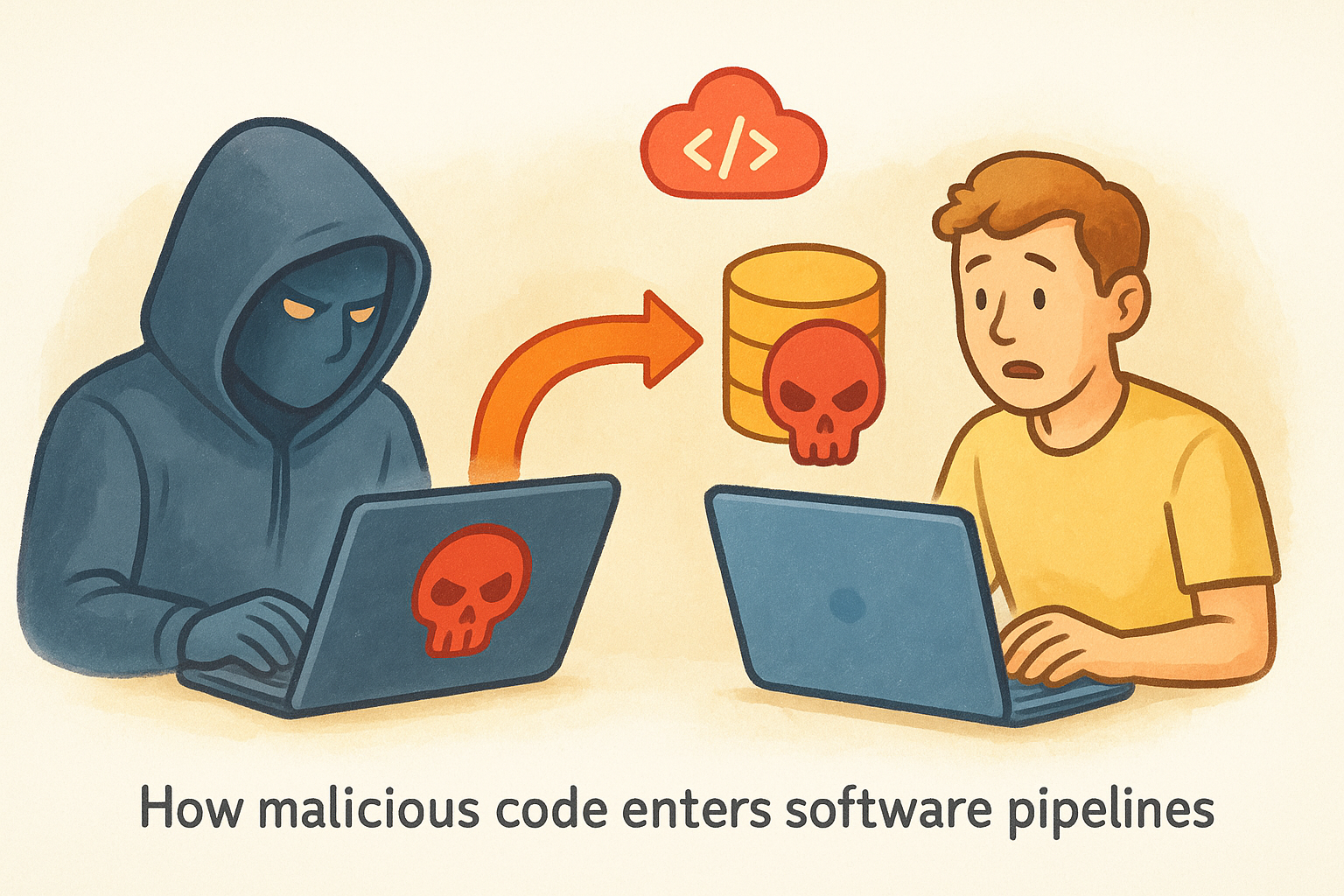
One compromised package can travel silently through dozens of downstream products before anyone detects the intrusion.
Firmware update mechanisms are another high-value target. If an attacker gains access to a manufacturer's signing infrastructure or distribution server, they can push a malicious update that carries a valid signature and installs without triggering any warnings on your device. You receive what looks like a routine security patch and end up running code you never agreed to trust.
Controls that protect software integrity
You can take concrete steps to reduce software supply chain exposure. Always install firmware updates and companion apps directly from the manufacturer's official source, rather than third-party download sites or app stores with unverified publishers. Before installing any update, confirm the release version and file hash match what the manufacturer has publicly documented.
Code signing and cryptographic verification exist specifically to catch tampering in transit. Reputable hardware wallet manufacturers publish checksums alongside their firmware releases. Comparing the checksum of a downloaded file against the published value takes under a minute and confirms the file was not altered after leaving the manufacturer's systems. Treat any update that cannot be independently verified with the same caution you apply to an unsealed physical package.
How to assess and reduce third-party risk
The supply chain security definition only becomes useful when you apply it to the specific vendors and dependencies you actually rely on. Third-party risk assessment isn't a one-time audit. It's a continuous process of identifying who you're trusting, what access they have, and whether that trust is still justified given current information. For hardware wallet buyers, this means asking hard questions about every entity that touched your device or its software before it reached you.
Map your dependencies before you evaluate anything
You can't assess risk you haven't identified. Start by listing every third party involved in delivering the product or software you're evaluating. For a hardware wallet, that list includes the device manufacturer, the firmware development team, the companion app publisher, and any reseller or distribution platform you used to make the purchase. Each of those parties represents a separate trust decision, and each carries its own risk profile.
A dependency you didn't know existed is a vulnerability you can never patch.
Once you have that list, research each party's security track record, public disclosure history, and official verification processes. Manufacturers who publish firmware checksums, maintain public security advisories, and document their build pipelines signal that they take supply chain integrity seriously. Those who don't provide this transparency deserve more scrutiny before you trust them with your assets.
Apply a consistent verification process
Mapping dependencies without acting on what you find produces no real protection. Build a repeatable verification routine for every product you add to your security setup. Before using any hardware wallet, confirm the device's firmware version against the manufacturer's official documentation, run any provided authenticity verification tools, and check that packaging seals are intact and match the manufacturer's specifications.
For software, compare file checksums against published values before installing any update or companion application. NIST's guidelines on software integrity provide a solid reference framework for understanding what rigorous verification looks like in practice. Apply the same standard to every update cycle, not just the initial setup. Third-party risk doesn't stop at the point of purchase. It persists for as long as you depend on that vendor's software and infrastructure to keep your assets secure.
Key takeaways and next steps
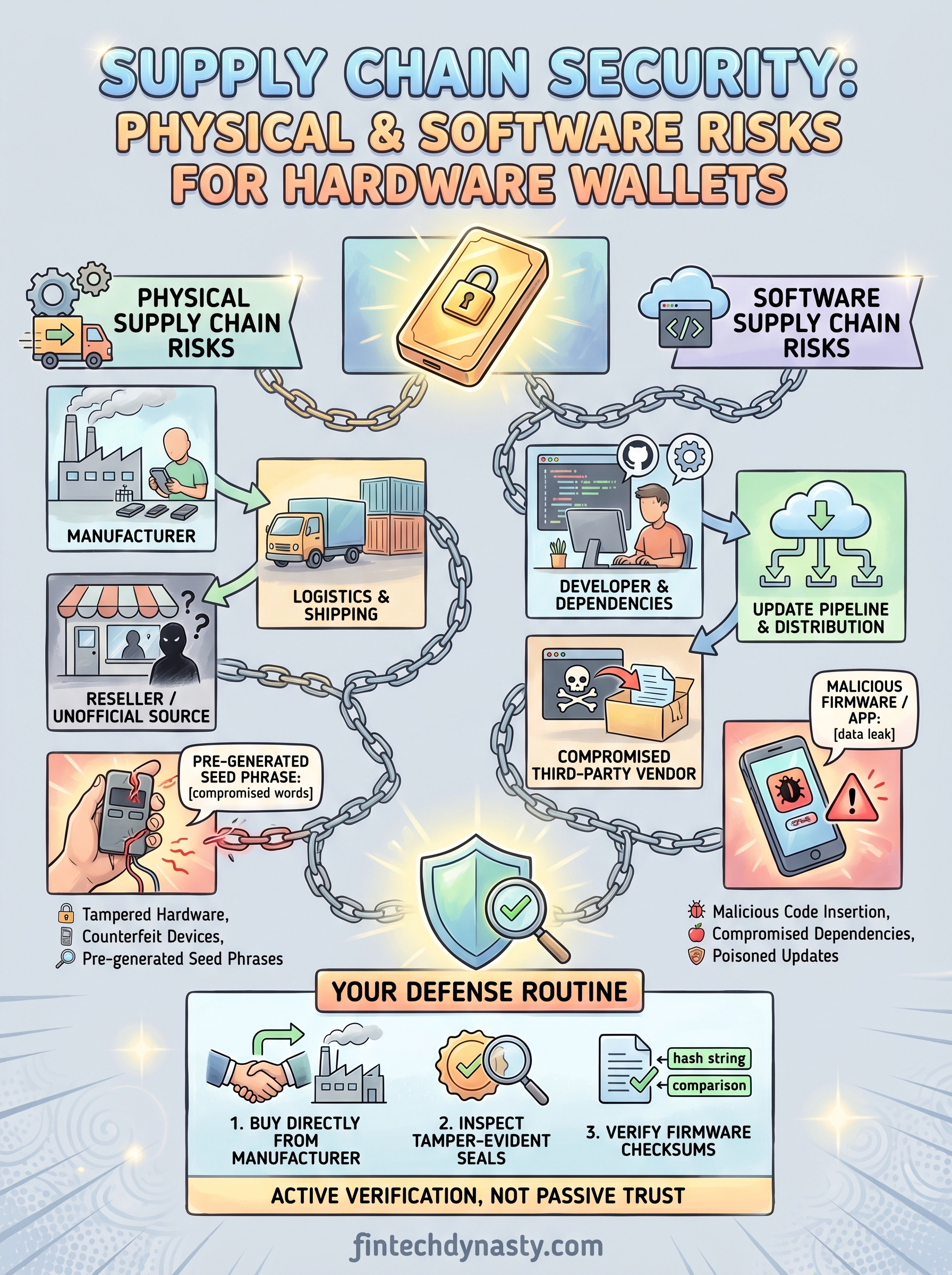
The supply chain security definition covers every handoff point between a product's origin and your hands, whether that product is a physical device or a software update. Physical risks include tampered hardware, counterfeit devices, and pre-generated seed phrases, while software risks center on compromised dependencies, malicious packages, and poisoned firmware updates. Both categories demand active verification, not passive trust.
Your best defense is a consistent routine. Buy hardware wallets directly from manufacturers, check tamper-evident seals on arrival, and verify firmware checksums before you use any device or install any update. Map your third-party dependencies regularly and reassess them whenever a vendor changes hands or experiences a security incident.
Understanding these risks is only the starting point. If you want to build a complete foundation for protecting your digital assets, start with FinTech Dynasty's structured crypto security course and work through the concepts in the right order, from wallet basics to advanced self-custody practices.