

Lob Address Verification API: Features, Setup & Limitations
Accurate address data matters more than most people realize, especially in fintech, where compliance requirements and shipping precision directly affect trust. At FinTech Dynasty, we cover the tools and infrastructure that keep digital finance secure, and address verification sits at the intersection of fraud prevention and operational accuracy. Whether you're shipping hardware wallets to customers or verifying identity for KYC workflows, bad address data creates real problems: failed deliveries, wasted spend, and compliance gaps.
The Lob Address Verification API is one of the more established solutions for validating, standardizing, and formatting mailing addresses programmatically. It supports both US and international addresses and plugs into existing applications through a straightforward REST API. But like any tool, it has tradeoffs worth understanding before you commit.
This article breaks down what the Lob Address Verification API actually does, how to set it up, what it handles well, and where its limitations start to show. If you're evaluating it for direct mail campaigns, database cleanup, or fintech compliance workflows, this is the technical overview you need before making a decision.
Why address verification matters for fintech teams
Fintech operations run on data accuracy. When address data is wrong, downstream processes break: KYC checks fail, physical shipments return undelivered, and compliance audits surface gaps that regulators notice. For teams managing hardware wallet fulfillment or sending compliance-related correspondence, a single bad address is not just an inconvenience. It is a cost center that compounds over time.
Fraud prevention and identity verification
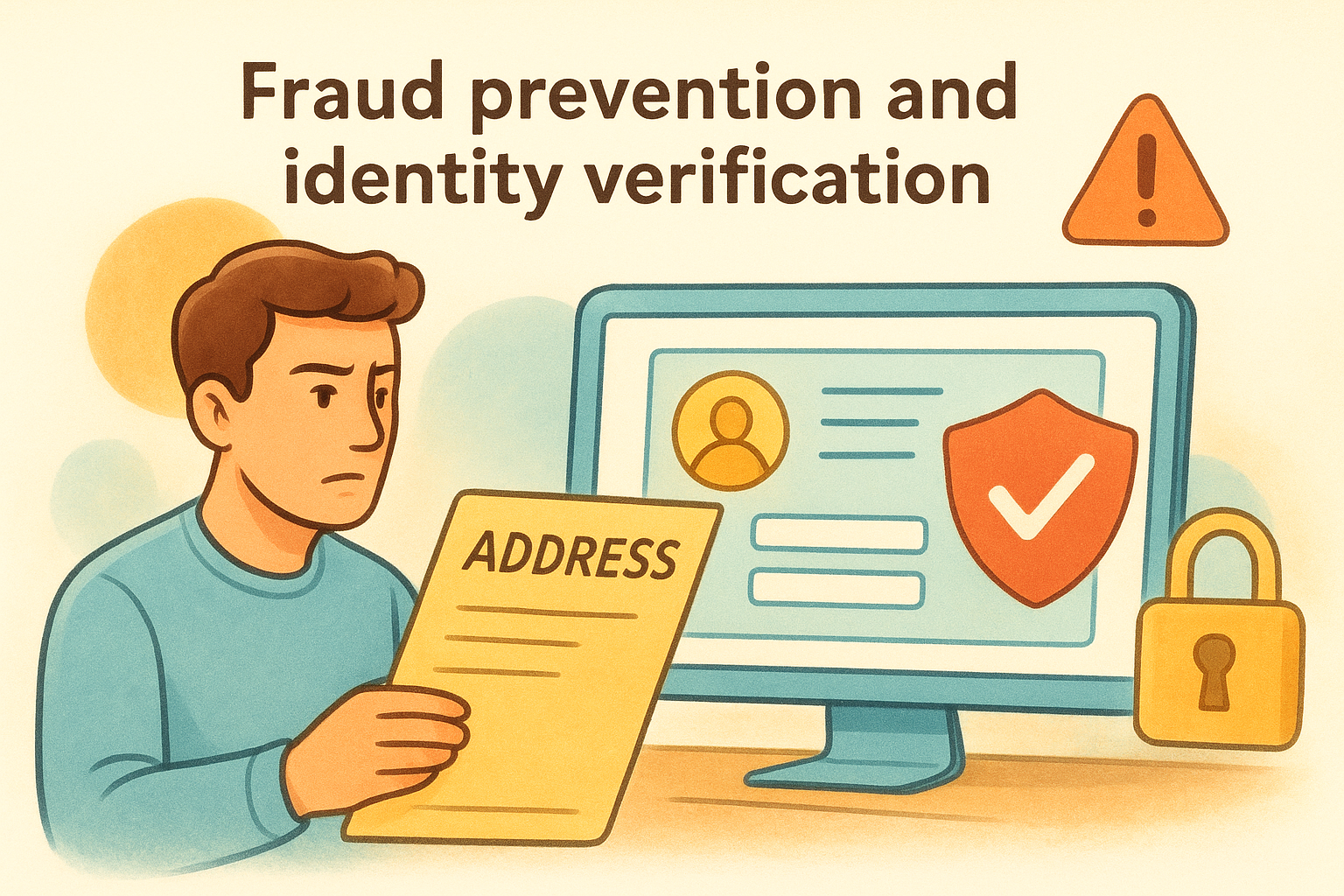
Address verification plays a direct role in KYC (Know Your Customer) workflows. When you collect a customer's address during onboarding, that address needs to match what's on file with government databases and identity documents. Unverified or malformed addresses allow fraudulent accounts to slip through, because automated checks either cannot match the address to a real location or match it to the wrong one. Using a tool like the lob address verification api in your onboarding pipeline adds a validation layer before records hit your database.
Catching address errors at intake is far less expensive than resolving identity mismatches or failed compliance checks after the fact.
Delivery accuracy for physical products
If your fintech operation ships physical products like hardware wallets or security tokens, undeliverable addresses mean lost packages. Return shipping, reshipment costs, and customer frustration add up fast. Beyond that, failed deliveries often signal address fraud, where someone intentionally provides a non-existent location to intercept a package or avoid verification. Standardizing addresses at the point of entry prevents most of these problems before they become operational issues.
Keeping your address data clean from the start is significantly cheaper than cleaning it after the fact. Database remediation projects are expensive and time-consuming, and they rarely catch every error. Building verification into your intake workflow solves the problem before it starts rather than managing the fallout later.
What the Lob address verification API does
The lob address verification api takes a raw address input and returns a standardized, deliverable version of that address, along with metadata describing its validity. It checks inputs against official postal databases, corrects common formatting errors, and flags addresses that cannot be delivered. You get back a structured response with fields covering deliverability status, individual address components, and whether the location is residential or commercial.
Deliverability scoring and address components
When you submit an address, Lob returns a deliverability score that tells you whether the address is deliverable, deliverable with corrections, or undeliverable. This score draws from USPS CASS-certified data for US addresses, meaning the verification meets federal postal standards.
For fintech teams, a CASS-certified result carries real weight in compliance documentation, since it ties your address data to a recognized government postal source.
Breaking the response down further, each verified address also comes back as individual components: street number, street name, city, state, and ZIP+4. Storing structured component data instead of raw address strings makes downstream matching more reliable, whether you're running identity checks, building customer records, or routing physical shipments.
How to set up and authenticate with Lob
Getting started with the lob address verification api takes less than ten minutes. You create a free account on Lob's website, navigate to the API Keys section in your dashboard, and copy the test or live key depending on your environment. Lob separates test and live keys so you can run verification calls against sample data without affecting your billing or production records.
Authenticating your API requests
Lob uses HTTP Basic Authentication, where your API key acts as the username and the password field stays empty. You pass the key in the Authorization header as a Base64-encoded string, which is the same pattern most REST APIs follow. Most HTTP client libraries handle this automatically when you supply credentials at the request level.
Using your test key during development keeps your account clean and lets you verify your integration logic before touching real data.
Switching to a live environment
When you're ready to move to production, swap your test key for the live key in your environment variables. Lob recommends storing keys as environment variables rather than hardcoding them in your application, which prevents accidental exposure in version control and keeps your credentials portable across deployment environments.
How to verify addresses and read the results
To send a verification request through the lob address verification api, you submit a POST request to https://api.lob.com/v1/us_verifications with your address fields in the request body. You can pass a single address or a bulk list, depending on whether you're verifying one record at a time or cleaning an existing dataset in batches.
Reading the response fields
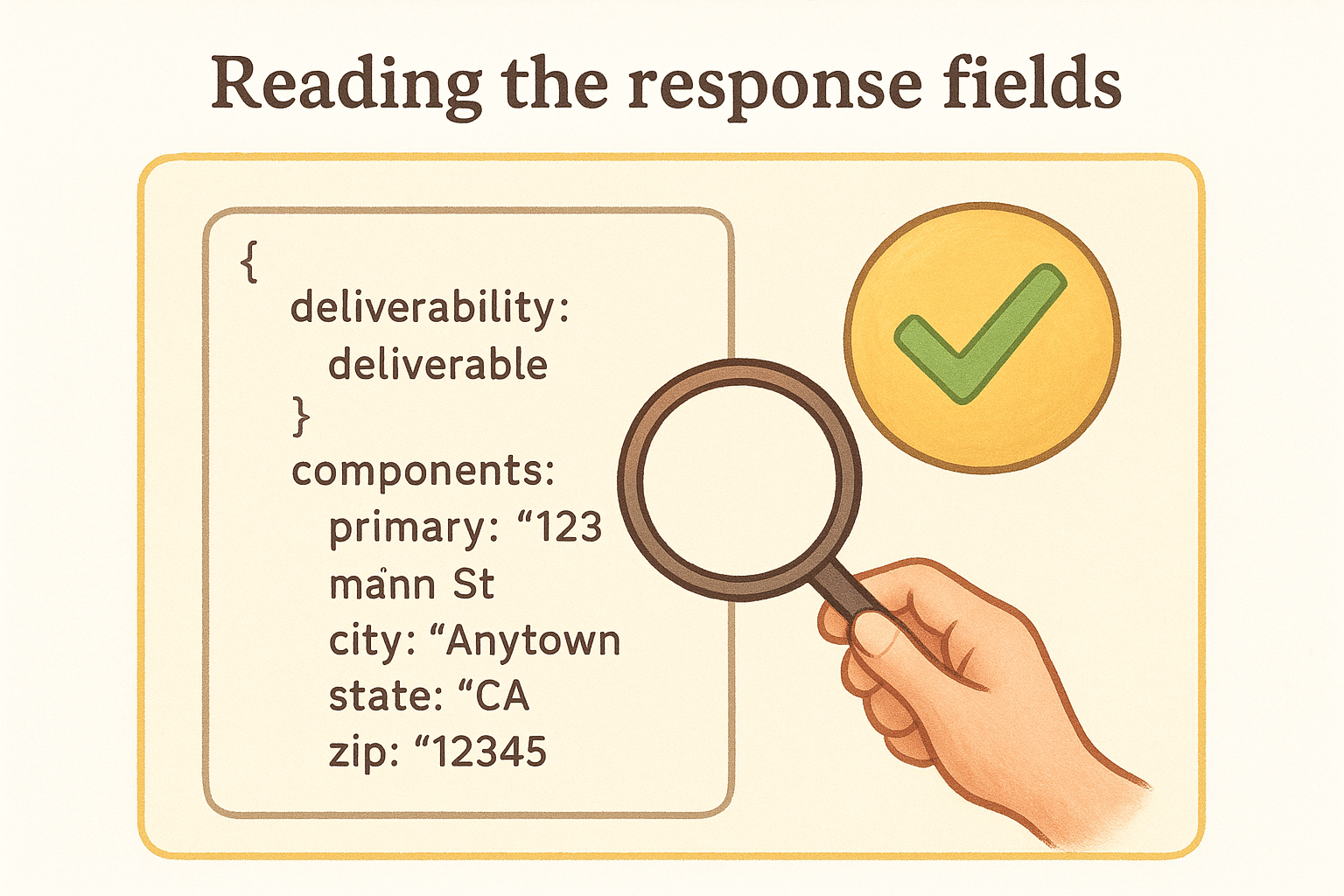
Lob returns a JSON object with several fields worth understanding before you build your parsing logic. The deliverability field is the first thing to check: it returns one of four values: deliverable, deliverable_unnecessary_unit, deliverable_missing_unit, or undeliverable. Each value tells you something specific about why the address passed or failed, which helps you write targeted error handling in your application.
Treat anything other than
deliverableas a flag that requires manual review before you store the record in your production database.
The components object breaks the verified address into individual parts: primary line, city, state, and ZIP+4 code. Storing components separately, rather than a single raw address string, gives your downstream systems more reliable matching capability and reduces false negatives during identity verification or fulfillment routing workflows.
Limits, edge cases, and compliance notes
The lob address verification api handles US addresses well, but its international coverage is more limited. For non-US addresses, Lob uses a separate endpoint and covers a smaller set of countries compared to specialized global verification services. If your fintech operation serves customers outside the US, test coverage for your target markets before building the integration into your onboarding flow.
Data retention and privacy considerations
Lob processes addresses on its servers, which means submitted address data passes through a third-party system. This matters for teams operating under GDPR, CCPA, or other data privacy regulations that govern how customer information is handled. Review Lob's data processing agreement and confirm it aligns with your compliance obligations before sending real customer data through the API.
If your compliance team requires data residency in specific regions, confirm Lob's infrastructure supports that before signing any service agreements.
PO boxes and non-standard addresses
Some edge cases consistently trip up address APIs, and Lob is no exception. PO boxes, rural routes, and military addresses may return deliverable scores even when they're unsuitable for your specific use case. Build explicit filters into your validation logic to catch these before they reach your fulfillment system:
- PO boxes (not valid for hardware wallet shipments)
- APO/FPO military addresses
- Rural Route addresses missing full street details
Next steps for cleaner address data
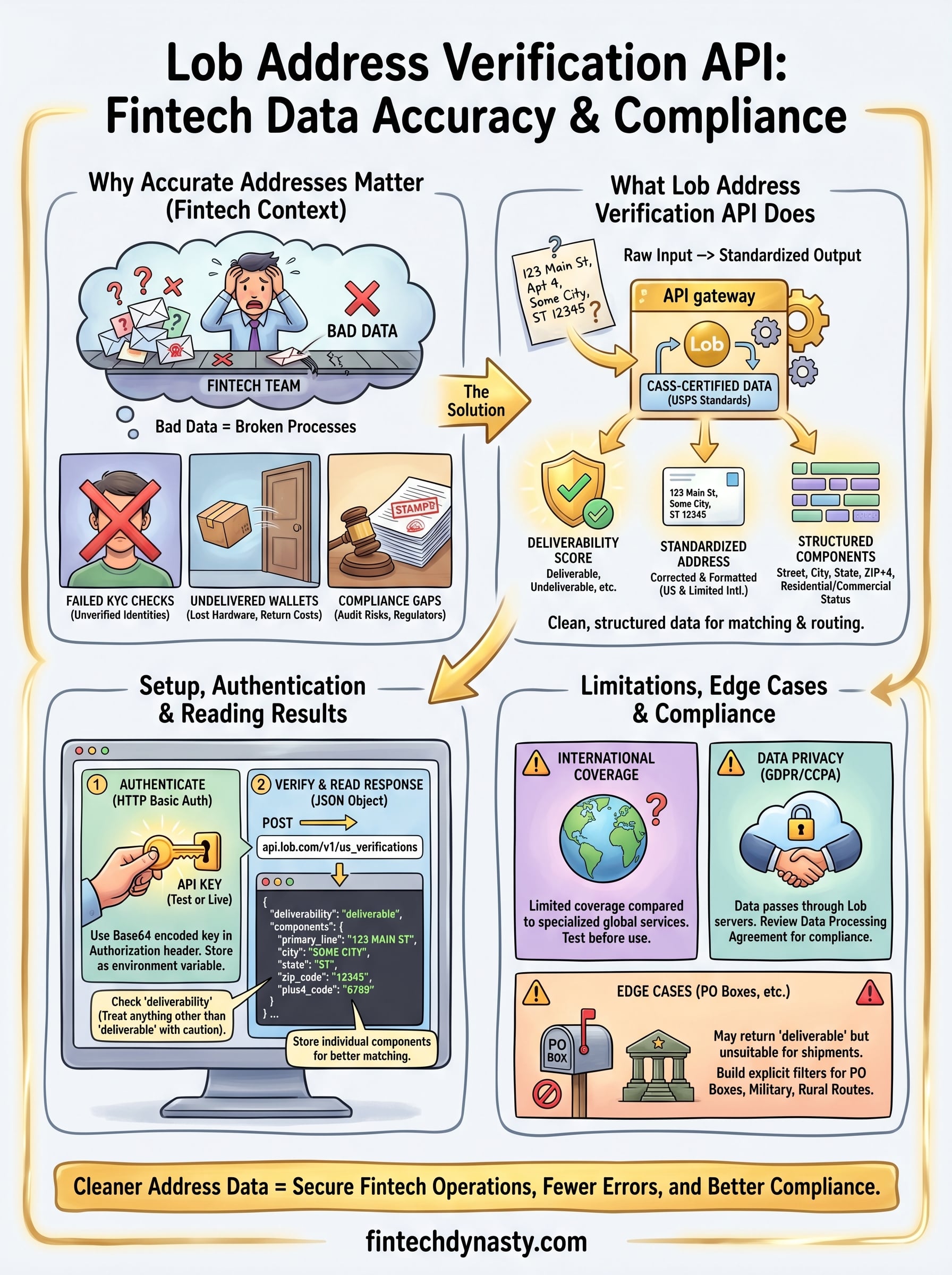
The lob address verification api gives you a practical, API-driven way to validate addresses at the point of entry, standardize stored records, and reduce the operational waste that comes from bad data. For fintech teams shipping physical products or running KYC workflows, building verification into your intake process pays for itself quickly in avoided fulfillment errors and compliance gaps.
Start by testing against your current customer database to see how many records fail verification. That number tells you how much technical debt your address data already carries and helps you prioritize the integration. Once you understand your failure rate, build the verification call into your onboarding form before records write to your database.
If you want a stronger foundation in the infrastructure behind secure crypto operations, the FinTech Dynasty crypto education course covers wallet security, self-custody, and practical tools to protect your digital assets at every layer.