

Casa Multisig Wallet: How It Works, Security Reviews & Pricing
Storing Bitcoin on a single hardware wallet works well, until that one device breaks, gets lost, or falls into the wrong hands. A Casa multisig wallet eliminates that single point of failure by requiring multiple keys to approve a transaction, so no one device or location can compromise your funds. It's one of the more practical approaches to self-custody for people holding significant amounts of Bitcoin long-term.
But how does Casa actually work under the hood? Is it worth the subscription cost? And does it live up to the security claims? These are the kinds of questions we dig into here at FinTech Dynasty, where our focus is on independent, research-backed crypto security guidance, no hype, no price speculation, just the technical details that matter when you're protecting your wealth.
This article breaks down Casa's multisig setup, walks through its security model, covers real user feedback and current pricing tiers, and helps you decide whether it fits your self-custody strategy.
Why people use the Casa multisig wallet
The most common reason people turn to Casa is straightforward: standard single-key storage creates too many ways to permanently lose access to your funds. A single hardware wallet, a single seed phrase, stored in one location - if any of those components fail, your Bitcoin is gone with no recourse. The Casa multisig wallet solves this by distributing signing authority across multiple independent keys, so one failure point no longer puts everything at risk.
Single points of failure cost people real money
Hardware wallets break, get stolen, or get destroyed in fires. Seed phrases written on paper can deteriorate, get discovered by the wrong person, or simply vanish after years in storage. When you rely on one key and something goes wrong, there is no recovery path - the funds are locked on the blockchain forever. Casa's multisig architecture means losing one key does not end your access, because the remaining keys can authorize a recovery or sign a transaction without it.
Most people don't realize how exposed single-key storage leaves them until they actually try to recover from a lost or damaged device.
Standard setups that feel secure today can become progressively more fragile as devices age, storage media degrades, and memory of PINs or passphrases fades over the years.
Long-term holders need a more durable setup
People holding Bitcoin for five, ten, or twenty years face a different risk profile than active traders. Durable long-term storage must survive hardware failures, forgotten PINs, and even your own incapacitation. Casa specifically addresses this group by building inheritance planning tools and guided key recovery directly into its paid tiers. If you are holding for the long term, multi-key security is not excessive caution - it is the appropriate level of protection for assets you intend to preserve.
How Casa multisig works behind the scenes
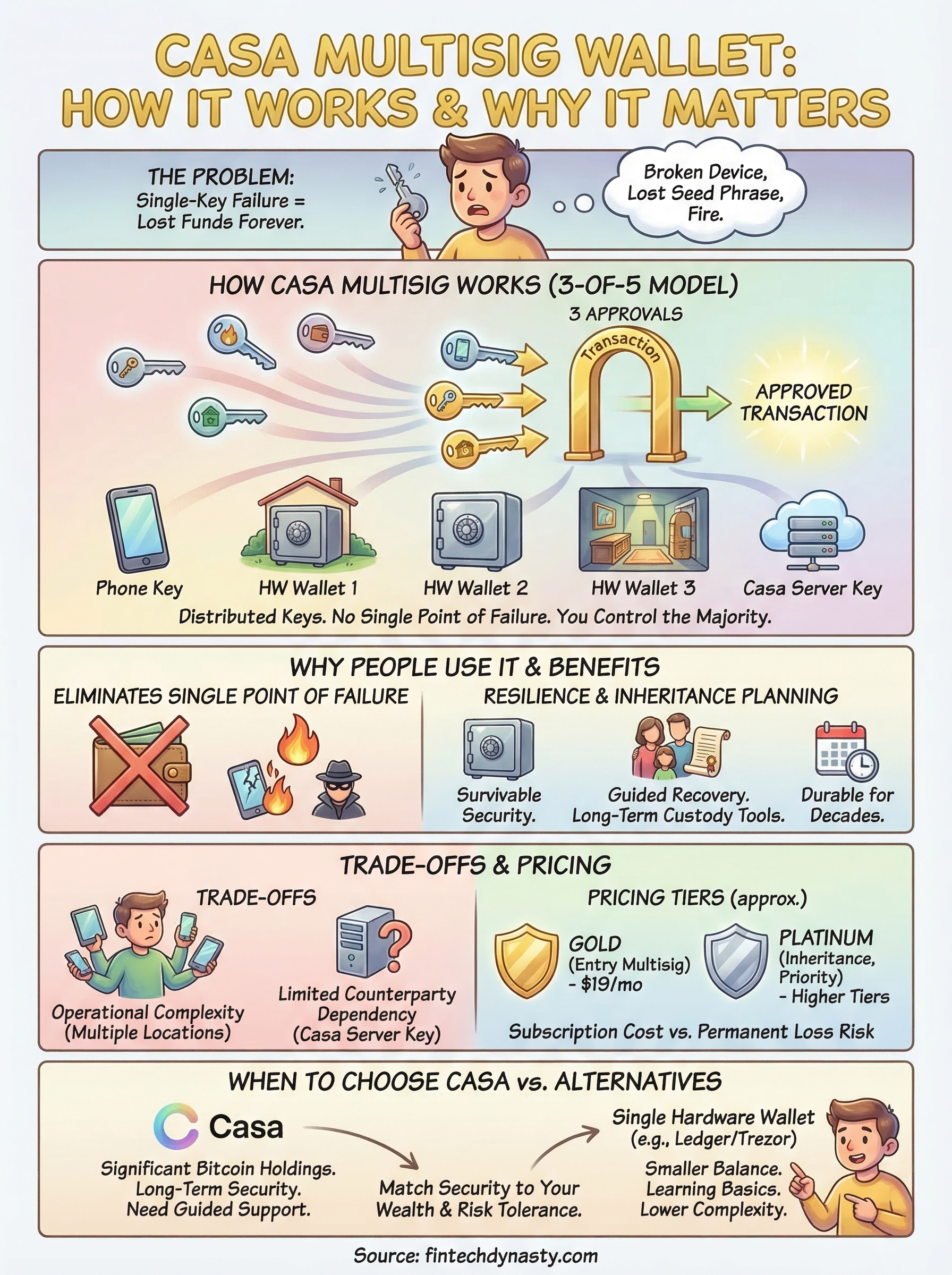
The casa multisig wallet runs on a threshold signature model, commonly called an M-of-N setup. This means a transaction only broadcasts to the Bitcoin network after a set number of keys sign it. Casa's most popular configuration is 3-of-5: five keys exist in total, and any three of them must sign before funds move.
How the keys are distributed across devices and locations
Casa spreads your five keys across different physical locations and device types, typically one key on your phone, two or three on separate hardware wallets you control, and one key held by Casa on a server. The geographic separation is intentional - no single theft, fire, or hardware failure can reach more than one or two keys at once.
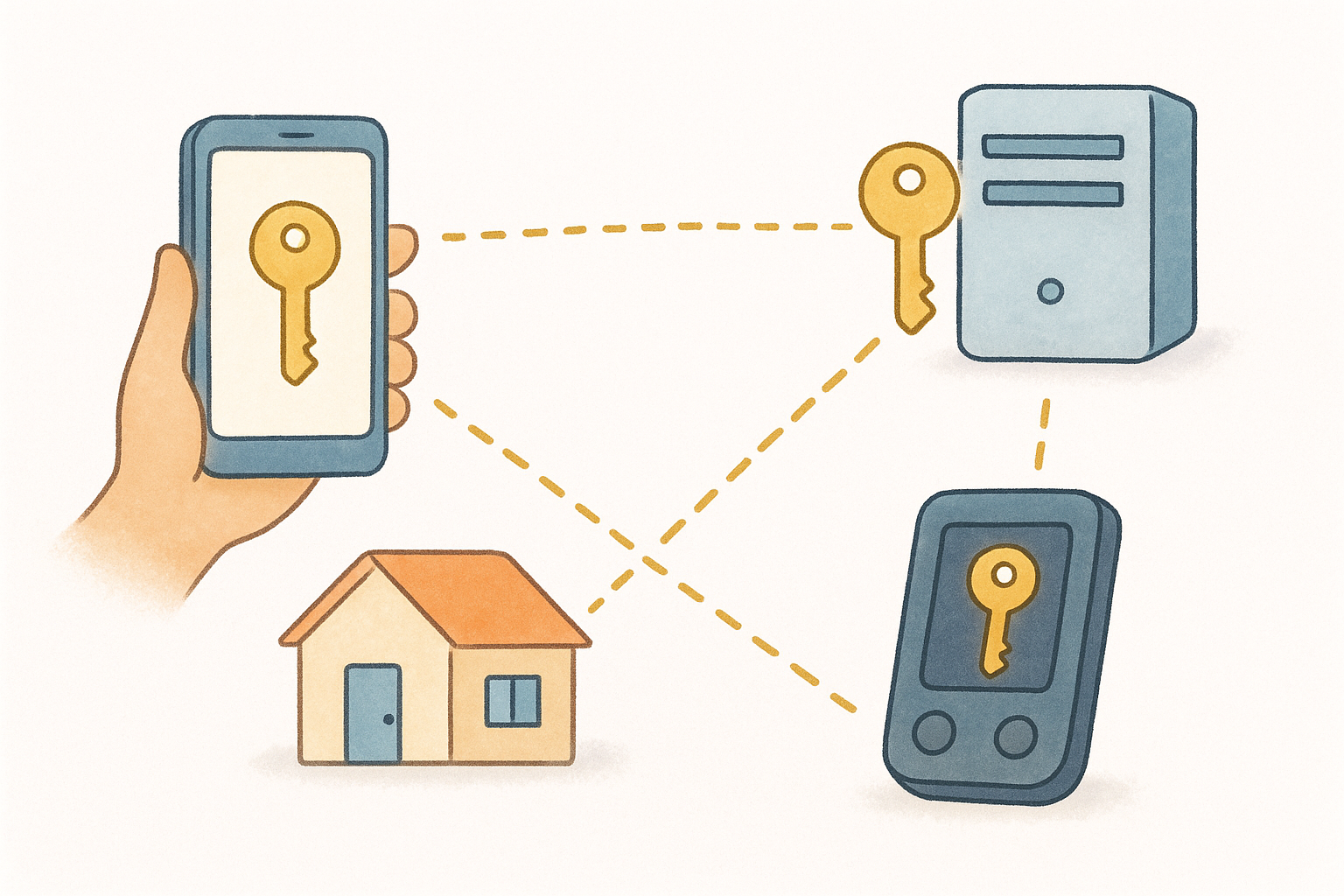
Keeping keys in separate locations is what makes multisig genuinely more resilient than any single-device setup.
When you initiate a transaction, Casa's app coordinates the signing process and collects confirmations from your keys one at a time. Once the threshold is reached, the transaction is complete. Casa's server key only participates in rare recovery situations, which means you retain full signing authority for normal day-to-day use.
How to set up and use Casa multisig safely
Setting up the casa multisig wallet begins with downloading the Casa app and creating an account. Casa walks you through each step inside the app, so you do not need deep technical knowledge to get started. Your first task is selecting how many hardware wallets you want to include, which determines your overall key distribution.
Getting started with the Casa app
During onboarding, Casa prompts you to generate and link each key in sequence, starting with your mobile key and moving through your hardware wallets. You connect each hardware device directly to the app and verify it registers correctly before moving to the next one. Never rush through the verification steps, because confirming each key is active is what ensures your multisig setup will work when you actually need it.
Complete each key verification step before moving on - skipping ahead creates gaps in your setup that are difficult to fix later.
Keeping your keys physically separated
Once your keys are active, storing them in separate physical locations is the single most important habit to maintain. Each storage spot should be secure and only accessible to you. Keeping two keys in the same place defeats the purpose of multisig protection.
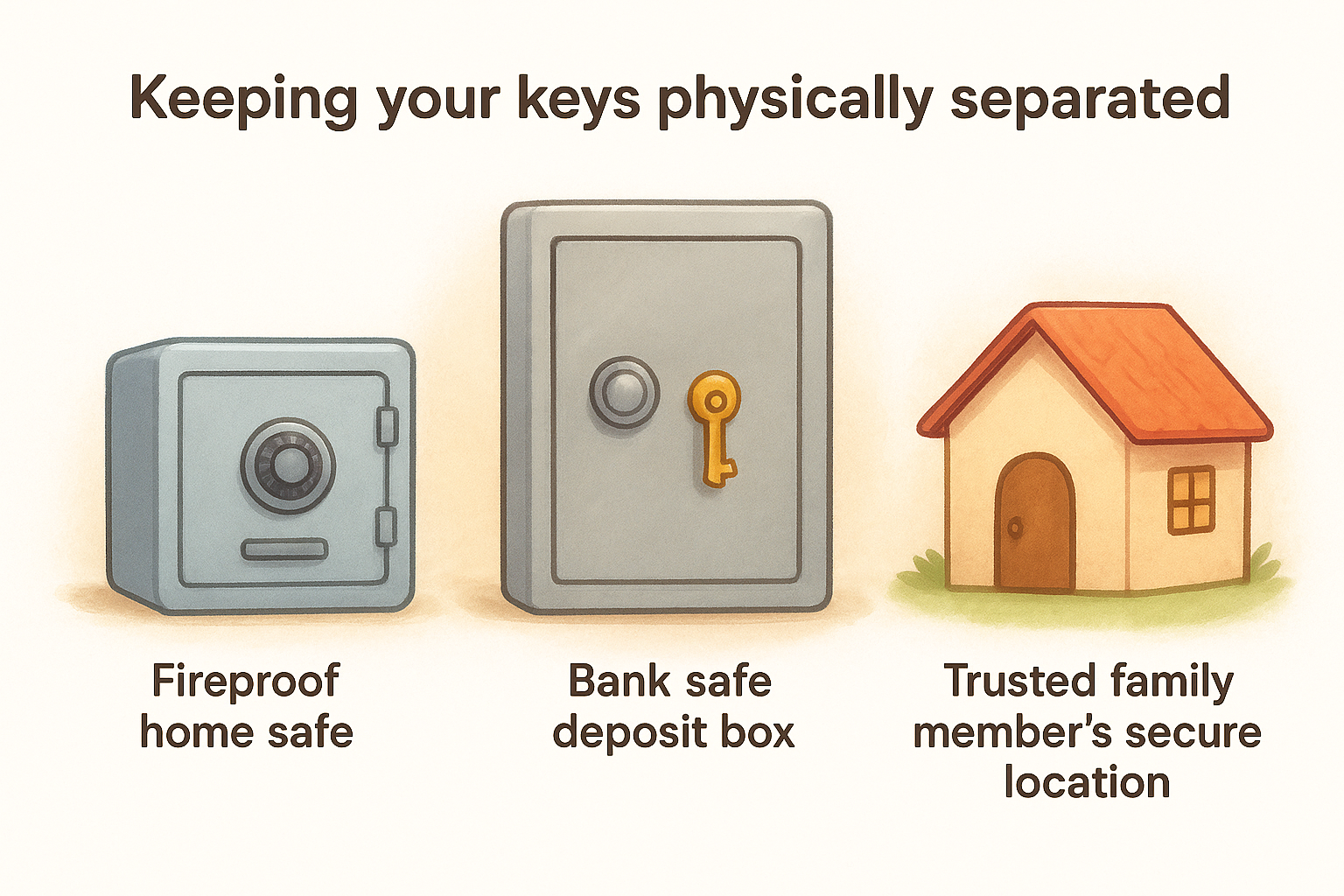
Strong storage locations to consider:
- A fireproof home safe
- A bank safe deposit box
- A trusted family member's secure location
Security analysis and the main trade-offs
The casa multisig wallet has a genuinely strong security foundation, but no system is perfect. Understanding both its strengths and its limitations helps you decide whether it fits your threat model and your practical tolerance for complexity.
What the security model gets right
Casa's distributed key architecture removes the catastrophic single-point-of-failure risk that standard hardware wallets carry. Even if one key is compromised, an attacker still needs additional keys to move your funds. Bitcoin-native multisig and open-source verification also mean your funds are not locked into proprietary technology you cannot audit independently.
Distributed key storage genuinely changes the risk math: one compromised location no longer means total loss.
Where the trade-offs show up
The main trade-offs are subscription cost and operational complexity. Running multisig correctly requires you to maintain multiple devices across separate locations, which takes real effort to sustain over years. Casa's server key also introduces a limited counterparty dependency, even though it cannot move funds on its own.
If Casa shuts down, you can still recover funds using your own keys, but losing access to the app creates friction that most single-key setups never require you to manage. For high-value, long-term holdings, that friction is worth it. For smaller balances, it may not be.
Pricing, plans, and when to choose an alternative
Casa charges a subscription fee for access to its multisig tiers, with pricing structured around the level of key complexity and support you need. Their entry-level plan covers a basic two-key setup, while higher tiers unlock 3-of-5 multisig, inheritance planning, and direct access to Casa's security team. Costs run from roughly $19 per month on the lower end to several hundred dollars annually for the premium tiers. Always verify current pricing directly on Casa's official website, since these figures change.
Paying a subscription for security infrastructure makes sense when the alternative is a single point of failure protecting significant Bitcoin holdings.
What each Casa plan includes
The Gold plan gives you multisig capability and app-guided key management, which covers most individual holders. Platinum and above add inheritance tools, priority support, and concierge key recovery, which matter if you are planning for multi-generational custody or hold a large amount.
When a simpler setup makes more sense
If you hold a smaller balance or are still learning the basics of self-custody, a single hardware wallet from Ledger or Trezor is a more practical starting point. The casa multisig wallet is best suited for holders who have already outgrown single-key storage and want a structured, supported path to more durable security.
Where to go from here
The casa multisig wallet is a well-built solution for Bitcoin holders who have decided that single-key storage no longer matches their risk tolerance. If you hold a meaningful amount of Bitcoin and plan to keep it for years, the combination of distributed keys, app-guided management, and inheritance tools makes Casa a logical next step. For most people, the subscription cost is a reasonable trade-off against the permanent loss that a single-key failure can cause.
Your immediate action is to assess where you currently stand. If you are still relying on an exchange or a single hardware wallet, it is worth building a stronger foundation before upgrading to multisig. Start with the fundamentals and understand how private keys and seed phrases work before evaluating whether Casa's subscription model fits your situation and your holdings.
For deeper guidance on hardware wallets, cold storage comparisons, and practical self-custody strategies, visit FinTech Dynasty and explore the structured resources there at your own pace.