

7 Safe Sizing Mistakes That Put Hardware Wallets at Risk
Last Updated: November 24, 2026
Quick Summary
Safe sizing starts with measuring the hardware wallet, backup device and recovery phrase medium, then adding at least 0.5 inch of clearance on every side. Compare those measurements against usable interior dimensions, not advertised capacity, which includes unusable volume lost to door thickness, shelving and locking bolts.
- Measure the longest, widest and thickest point of each item before shopping.
- Add 0.5 inch clearance per side, plus 0.25 inch for shelf tilt-out.
- Fire-rated construction adds insulation that eats interior space, so size up.
- Plan capacity by counting signers and phrases, not devices.
- A multisig setup stored entirely in one safe defeats the purpose of multisig.
Table of Contents
- Why Hardware Wallet Safe Sizing Goes Wrong
- Measure the Wallet, the Backup and the Recovery Phrase First
- Advertised Capacity vs Usable Interior Dimensions
- Picking a Portable Safe for Hardware Wallet Storage
- Safe Storage for Crypto Recovery Phrase: Keep It Separate
- Does a Fireproof Safe for Crypto Seed Phrase Change the Size You Need?
- Hardware Wallet Backup Storage: Sizing for Multiple Devices and People
- Sizing a Safe Without Overbuying on Locks, Alarms and Steel
- Frequently Asked Questions
Why Hardware Wallet Safe Sizing Goes Wrong
Most people buy a safe for their hardware wallet the way they buy a suitcase: they guess. They picture the device, add some mental padding, and order something that looks about right. Then the seed phrase plate arrives, the backup capsule arrives, the second wallet arrives, and the safe is full before the first month is out.
Here is the uncomfortable part. Research from Yu et al. on how cryptocurrency users choose and secure their wallets found that hardware wallets shield users from malware risks but remain vulnerable to physical theft and damage. A safe addresses only part of the security problem, and it only does that job if it actually fits what you need to put inside it.
This guide covers common sizing errors that beginners make, plus the measurements and capacity math that help prevent them.
Measure the Wallet, the Backup and the Recovery Phrase First
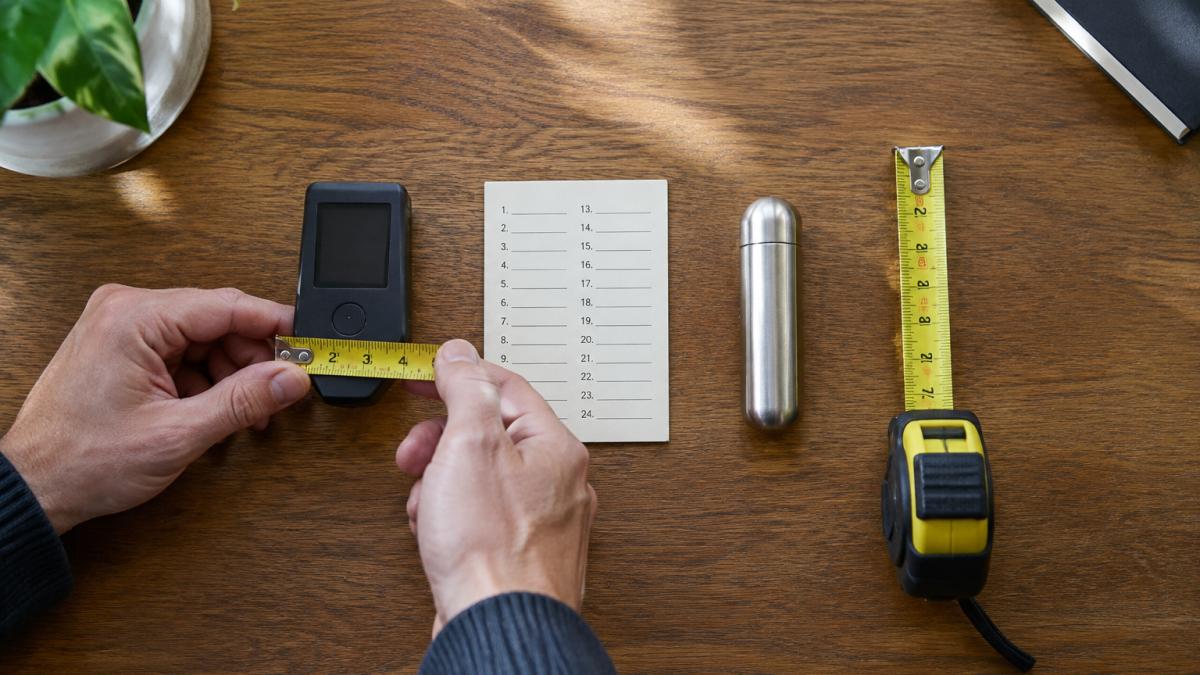
Safe sizing starts with a tape measure, not a shopping page. Before you look at a single product listing, measure the three things that will live inside: the hardware wallet, any backup device, and the recovery phrase medium. The goal is not a perfect fit, it is a fit that lets you lift each item out without scraping knuckles or bending a metal plate.
Wallet and Backup Device Dimensions
Most hardware wallets are pocket-sized, but the numbers still matter. Most hardware wallets are small, roughly the size of a USB stick. Those are small numbers, but they are not the only thing going into the safe. Add the thickness of any case, the length of a connected cable if you store one with the device, and the bulk of the retail box if you keep it for resale or warranty.
A practical method:
- Measure the longest edge, the widest edge, and the thickest point of each item.
- Add at least 0.5 inch of clearance on every side so fingers can grip and lift.
- Add another 0.25 inch if the item sits on a shelf and you need to tilt it out.
- Write the three numbers down as a single "item envelope", for example, 4.0 x 2.5 x 1.0 inches.
If you are still choosing the storage medium itself, our crypto seed phrase storage collection shows the actual metal backup formats and their footprints before you commit to an interior size.
Recovery Phrase Formats and Their Space Needs
Recovery phrase storage is where sizing quietly breaks. A stamped metal plate takes far more room than a folded card. An 8-letter full-word plate, like the metal BIP39 recovery phrase storage plate, has a different footprint than a compact 4-letter design. A 72-word storage capsule adds another shape entirely.
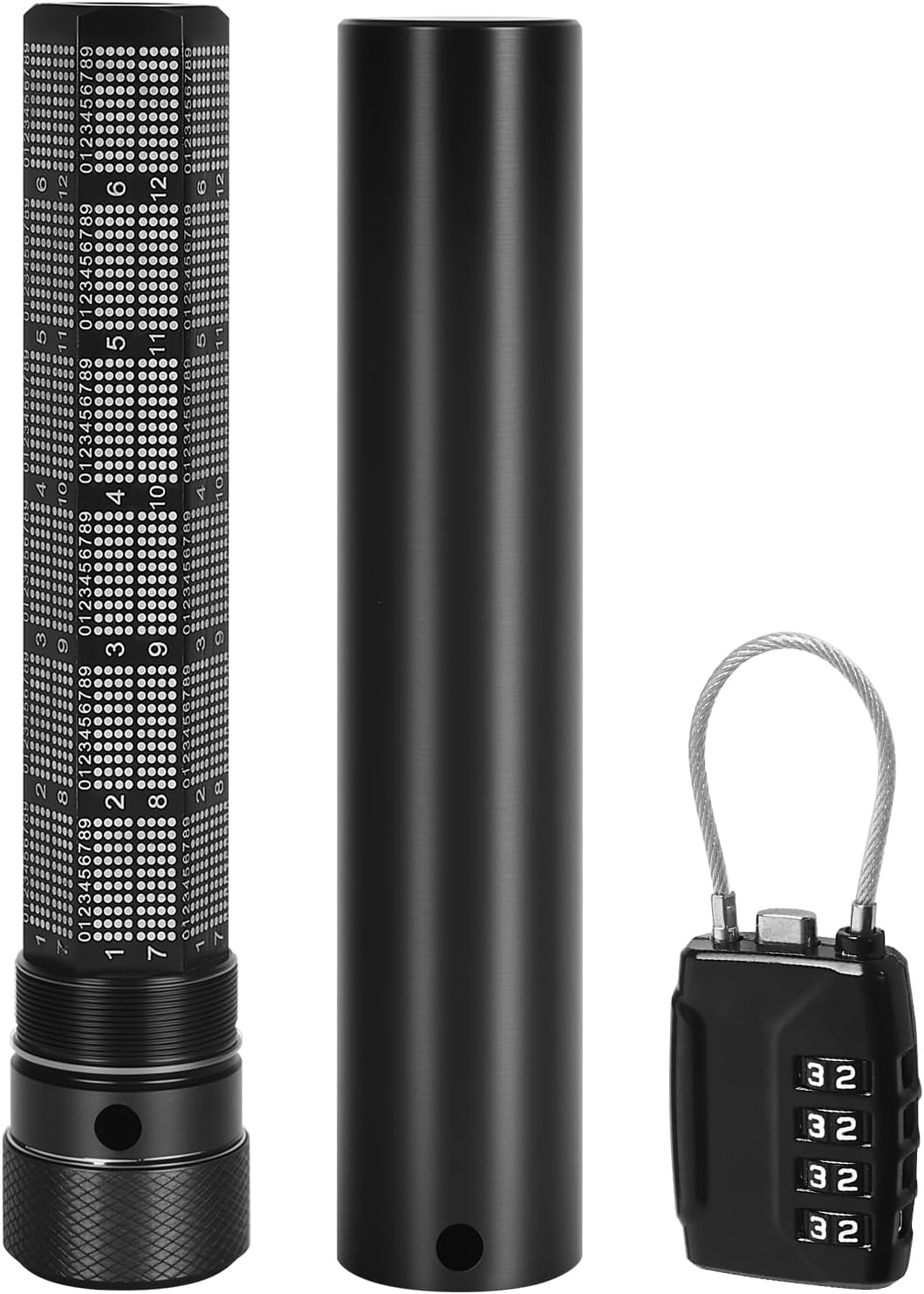
Measure the plate or capsule flat, then add the thickness of any protective sleeve. Write all three measurements down before you shop.
Watch out: a plate measured only by its face can still fail to fit once the sleeve, the engraving depth, and the safe's door lip are accounted for, measure the assembled stack, not the bare metal.
A Worked Example
Suppose you have a hardware wallet, a metal recovery plate and a backup capsule. Add up the measured footprint of each item with clearance, then compare that total against a safe's interior dimensions, not the advertised exterior size.
Advertised Capacity vs Usable Interior Dimensions
Advertised cubic footage is not usable space. A safe marketed at a given capacity loses volume to door thickness, shelving, locking bolts and internal fittings. Two safes with identical advertised numbers can hold noticeably different amounts.
The practical fix: ignore the headline figure and look for interior dimensions. Compare those against your measured items plus clearance. If a listing only shows exterior size, treat it as unverified for your purposes.
| What to check | Why it matters | What to do |
|---|---|---|
| Interior width, depth, height | Determines whether items fit flat | Measure against your longest item plus clearance |
| Shelf spacing | Limits stacked storage | Confirm shelves are adjustable or removable |
| Door clearance | Affects access to corner items | Allow room to reach in and lift out |
| Advertised capacity | Often includes unusable volume | Use only as a rough sorting tool |
Picking a Portable Safe for Hardware Wallet Storage
A portable safe for hardware wallet storage trades interior space for concealment and mobility. That trade is worth it in some situations and wrong in others.
- Best for: renters, travel, and splitting backups across two locations
- Skip if: you are storing multiple devices, large plates, or documents alongside
Watch out: a portable safe that is easy to carry is also easy to carry away. Anchor it or conceal it, or the portability becomes the vulnerability.
Safe Storage for Crypto Recovery Phrase: Keep It Separate
Safe storage for a crypto recovery phrase means storing the phrase apart from the device it recovers. If a thief takes the wallet and the phrase together, they take everything. Separation turns a single loss into a survivable one.
In practice, that means two containers, or one container plus a second location. Many holders keep the hardware wallet in a home safe and the metal backup somewhere else entirely. The tradeoff is real: two locations mean two things to protect and two things to remember. The security gain usually justifies it.
Does a Fireproof Safe for Crypto Seed Phrase Change the Size You Need?
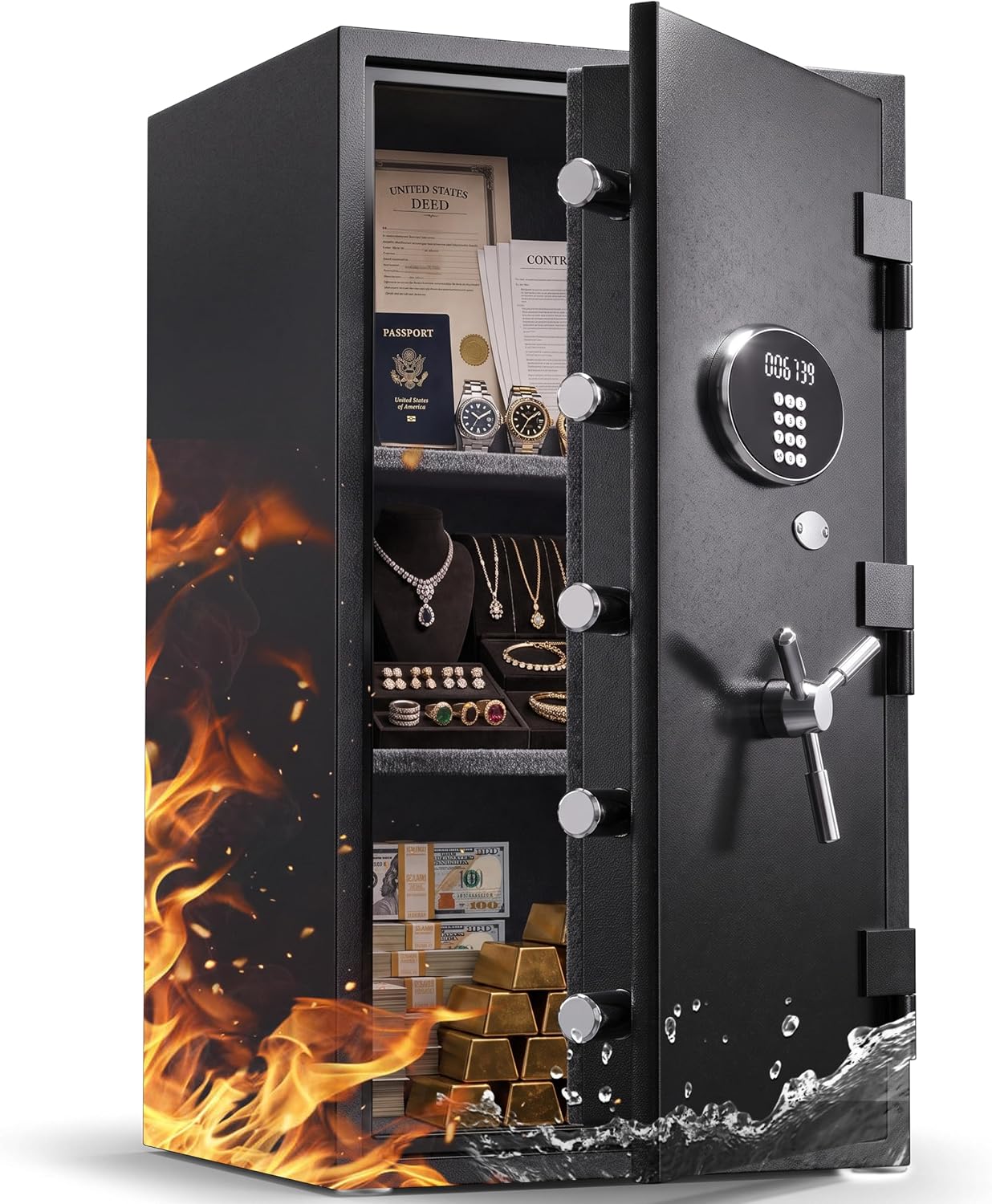
A fireproof safe for crypto seed phrase storage usually needs more interior room than a standard box. Fire-rated construction adds insulation, and insulation eats space. The same exterior footprint holds less than a non-rated safe of similar size.
That is not a reason to skip fire rating. It is a reason to size up rather than assume. If you are weighing fireproofing, the 23.62 inch true fireproof safe shows a real interior and feature set so you can judge the tradeoff against your measured items rather than guessing.
Hardware Wallet Backup Storage: Sizing for Multiple Devices and People
Hardware wallet backup storage gets complicated the moment a second person is involved. Two wallets, two recovery phrases, and a spouse or heir who needs access adds up fast. Most guides stop at "buy a bigger safe." A capacity plan is more useful than a bigger box.
Count Signers, Not Devices
Plan capacity by counting signers, not devices. Each person with access needs their own phrase stored, and each phrase needs its own space. A multisignature setup multiplies this further, since threshold schemes distribute signers across locations. For a deeper walkthrough of backup setups, our guide on how to back up a hardware wallet covers the storage side in detail.
A simple rule: count every phrase, add one spare slot, then measure. But the rule only works if you know what a slot costs in interior space.
A Practical Capacity Chart
Use this as a starting point, then adjust with your own measurements from the section above. Dimensions are usable interior space, not exterior size.
| Setup | Wallets | Recovery phrases | Approx. usable interior | Notes |
|---|---|---|---|---|
| Solo beginner | 1 | 1 metal plate | 8 x 5 x 2 in | Fits a small home safe or a portable box |
| Solo with spare | 2 | 2 plates | 10 x 6 x 2.5 in | Room for a cable and a sleeve |
| Couple, shared access | 2 | 2 plates + 1 heir copy | 12 x 7 x 3 in | Heir copy may live elsewhere |
| Multisig, 2-of-3 | 3 | 3 plates across 2 locations | 12 x 8 x 3 in per location | Do not co-locate all signers |
| Family with documents | 2 | 2 plates + passports | 14 x 10 x 4 in | Consider a document safe, not a wallet box |
Wallets
These are planning figures, not product specs. Measure your actual items and add clearance before you buy.
The Separation Tradeoff
Safe storage for a crypto recovery phrase means storing the phrase apart from the device it recovers. If a thief takes the wallet and the phrase together, they take everything. Separation turns a single loss into a survivable one.
In practice, that means two containers, or one container plus a second location. Many holders keep the hardware wallet in a home safe and the metal backup somewhere else entirely. The tradeoff is real: two locations mean two things to protect and two things to remember. The security gain usually justifies it, but the capacity plan has to reflect it, a chart that assumes everything lives in one box will overstate how much interior space you actually need in each location.
Watch out: a multisig setup stored entirely in one safe defeats the purpose of multisig.
Sizing a Safe Without Overbuying on Locks, Alarms and Steel
Bigger safes bring bigger locks, alarms and steel, and those features consume interior volume and budget. Overbuying looks like a large safe with a thick door and an alarm you did not need, holding two small devices and a metal plate.
Match the security level to the value and the threat. A larger double-door unit with digital access, hidden-code entry and dual alarms makes sense when you are storing documents and electronics alongside hardware wallets.
The sizing mistakes above all share one root cause: shopping before measuring. If you want a structured path through self-custody, from wallet selection to recovery phrase storage and inheritance planning, FinTech Dynasty offers a calm, objective educational platform covering how blockchain systems work and how to store digital assets safely.
Frequently Asked Questions
What size safe do I need for a hardware wallet?
A hardware wallet is small, roughly the size of a USB stick, so the device itself needs very little room. The size decision comes from everything stored with it: the backup card, a steel capsule, cables and any documents. Measure the wallet plus its backup, add 2 to 3 cm of clearance on each side so you can lift items out, then compare that figure against the usable interior dimensions rather than the advertised cubic feet. A compact lockbox often fits a single wallet and capsule; a larger home safe suits several devices and documents.
Should I store my hardware wallet and recovery phrase in the same safe?
Separating them is the safer habit. A hardware wallet protects private keys from malware because it stays offline, but the device can still be stolen or damaged physically, as wallet security research has noted. If the wallet and its recovery phrase sit in one box, a single theft or fire removes both the device and the backup that would restore it. Store the seed phrase in a separate location, ideally in its own fire-resistant container, and keep the wallet elsewhere. That way one incident does not cost you both copies of access.
Can a small portable safe protect a hardware wallet?
A portable safe for hardware wallet storage works well for the device itself and for a backup card, and it has the advantage of being easy to conceal and move. The tradeoff is that small portable safes usually offer less fire and water protection than full-size home safes, and they can be carried away whole. Use one for the wallet, keep the recovery phrase in a separate fireproof container, and check the lock type and any stated fire rating before relying on it.
How much space should I leave for a seed phrase capsule?
Leave room for the capsule plus clearance to grip and lift it. Steel seed phrase capsules are compact but thicker than a folded card, so measure the capsule's actual height and width rather than guessing from the word count. If you store more than one backup, or plan to add a second wallet later, size up one step now. Checking usable interior dimensions against the capsule's real measurements avoids buying a box that closes but forces you to stack items and risk damage.
