

What Is Cold Storage Crypto? How It Works & Why It Matters
Exchange hacks and platform collapses have cost crypto holders billions. If you've ever searched what is cold storage crypto and why so many long-term holders swear by it, the answer comes down to one core principle: keeping your private keys completely offline.
Cold storage removes your cryptocurrency from internet-connected devices, cutting off the most common attack vectors hackers exploit. Unlike hot wallets or exchange accounts, a cold wallet never exposes your keys to online threats, making it the preferred method for protecting digital assets you plan to hold for months or years.
At FinTech Dynasty, we focus on helping you understand and implement proper self-custody without the noise of price speculation or trading hype. This guide breaks down exactly how cold storage works, what separates it from hot wallets, and why it should matter to anyone serious about securing their crypto holdings for the long haul.
Why cold storage matters for crypto security
You face two fundamental threats when you hold cryptocurrency on exchanges or in hot wallets: the platform can fail, or hackers can breach the system. FTX, Mt. Gox, Celsius, and BlockFi all collapsed, locking users out of their funds permanently. These failures happened because you never actually controlled the private keys. The exchange did. Understanding what is cold storage crypto becomes critical when you realize that no third party should ever hold the keys to your wealth.
When you store crypto on an exchange, you're trusting that platform to protect your assets. Cold storage eliminates that trust requirement entirely.
Exchange and hot wallet vulnerabilities
Exchanges store billions in user funds on internet-connected servers, creating massive targets for cybercriminals. Even when platforms implement strong security protocols, a single vulnerability in their infrastructure can expose your holdings. Hot wallets on your phone or computer carry similar risks. Malware, phishing attacks, and remote access exploits can all compromise devices connected to the internet. Every second your private keys remain online, they're exposed to automated scanning tools that probe for weaknesses across millions of devices simultaneously.
Protection against remote attacks
Cold storage physically isolates your private keys from any network connection. Hackers cannot remotely access hardware wallets that never touch the internet, and they cannot deploy malware against devices that don't run standard operating systems. This approach blocks the most common attack methods outright. Keyloggers can't capture what you never type online. Phishing sites can't steal credentials you never enter on a browser. Remote exploits fail completely when the device holding your keys has no way to receive incoming connections. You maintain full control over when and how your assets move, and no platform bankruptcy or server breach can impact funds secured offline.
How cold storage works, step by step
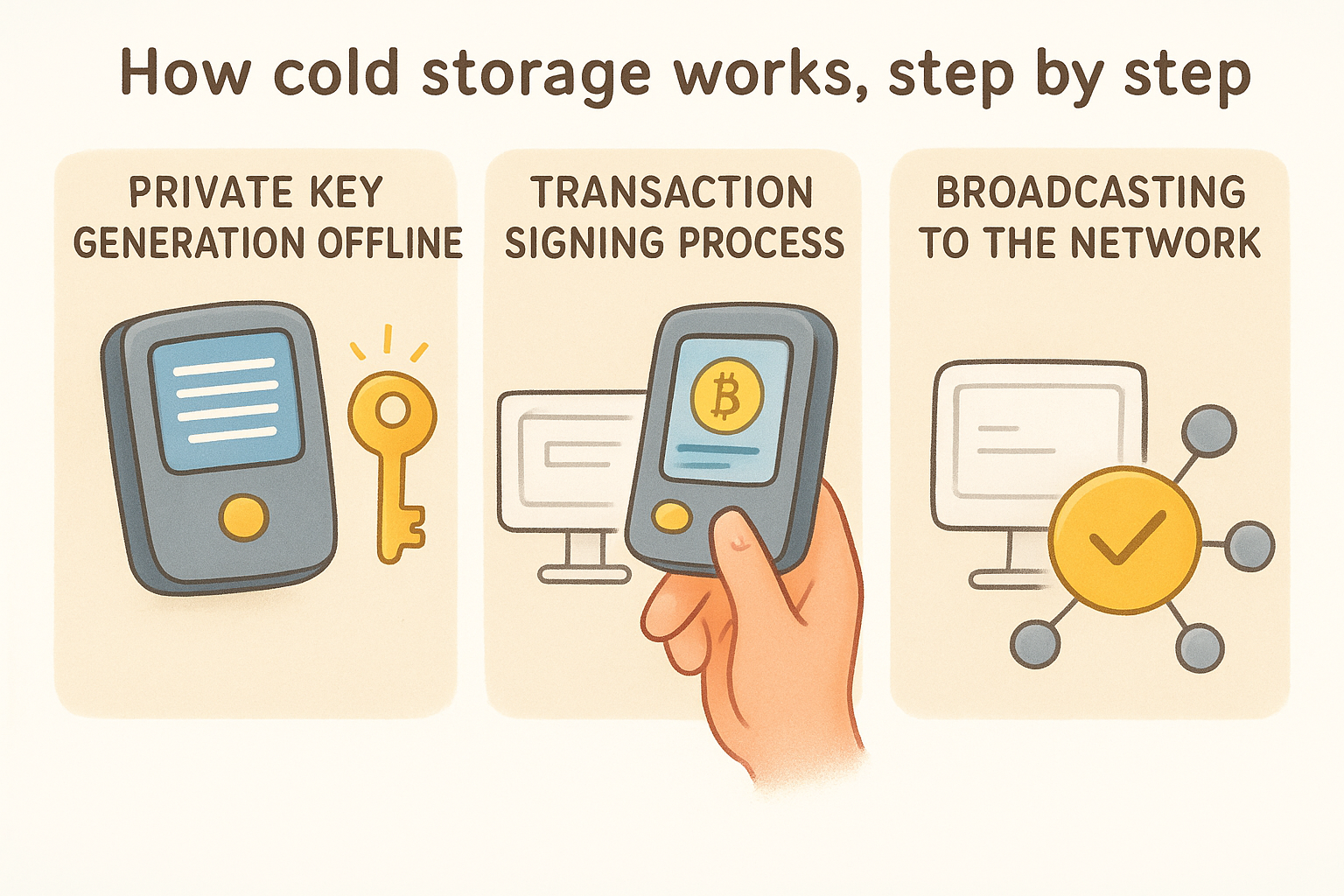
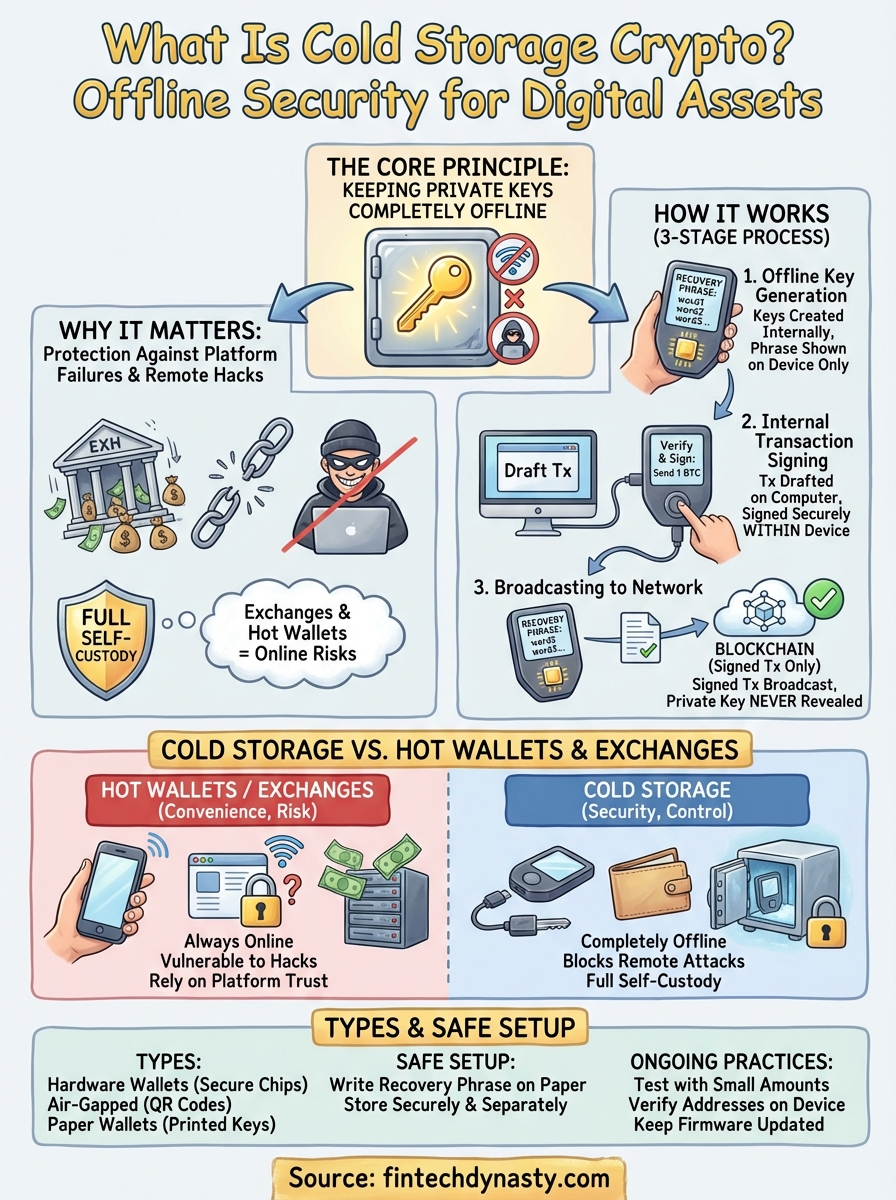
Cold storage operates through a three-stage process that keeps your private keys completely isolated from internet-connected devices. Understanding what is cold storage crypto requires seeing how hardware wallets generate keys, sign transactions, and broadcast them without ever exposing sensitive data online. The entire system works because your private keys never leave the secure device, even when you initiate transfers or check balances.
Private key generation offline
Your hardware wallet creates private keys internally using a secure chip or isolated processor. The device generates these keys through cryptographic randomness that cannot be predicted or replicated. When you set up a cold wallet, it produces a recovery phrase (typically 12 or 24 words) that represents your private key. This phrase never appears on your computer or phone. The hardware wallet displays it directly on its own screen, ensuring no software on internet-connected devices can capture or store it.
Transaction signing process
When you want to send cryptocurrency, you draft the transaction on your computer using wallet software, but the actual signing happens inside the hardware device. Your computer sends transaction details to the cold wallet, which displays them on its screen for your verification. You physically confirm the transaction by pressing buttons on the device itself. The hardware wallet signs the transaction internally using your private key, then sends only the signed transaction back to your computer.
Cold wallets protect you because the private key performs its cryptographic work entirely within the device's secure environment.
Broadcasting to the network
Your computer receives the signed transaction and broadcasts it to the blockchain network. The transaction contains your signature proving ownership, but never reveals your private key. Network validators confirm the transaction, and your crypto moves to the recipient's address while your keys remain safely offline.
Cold storage vs hot wallets and exchanges
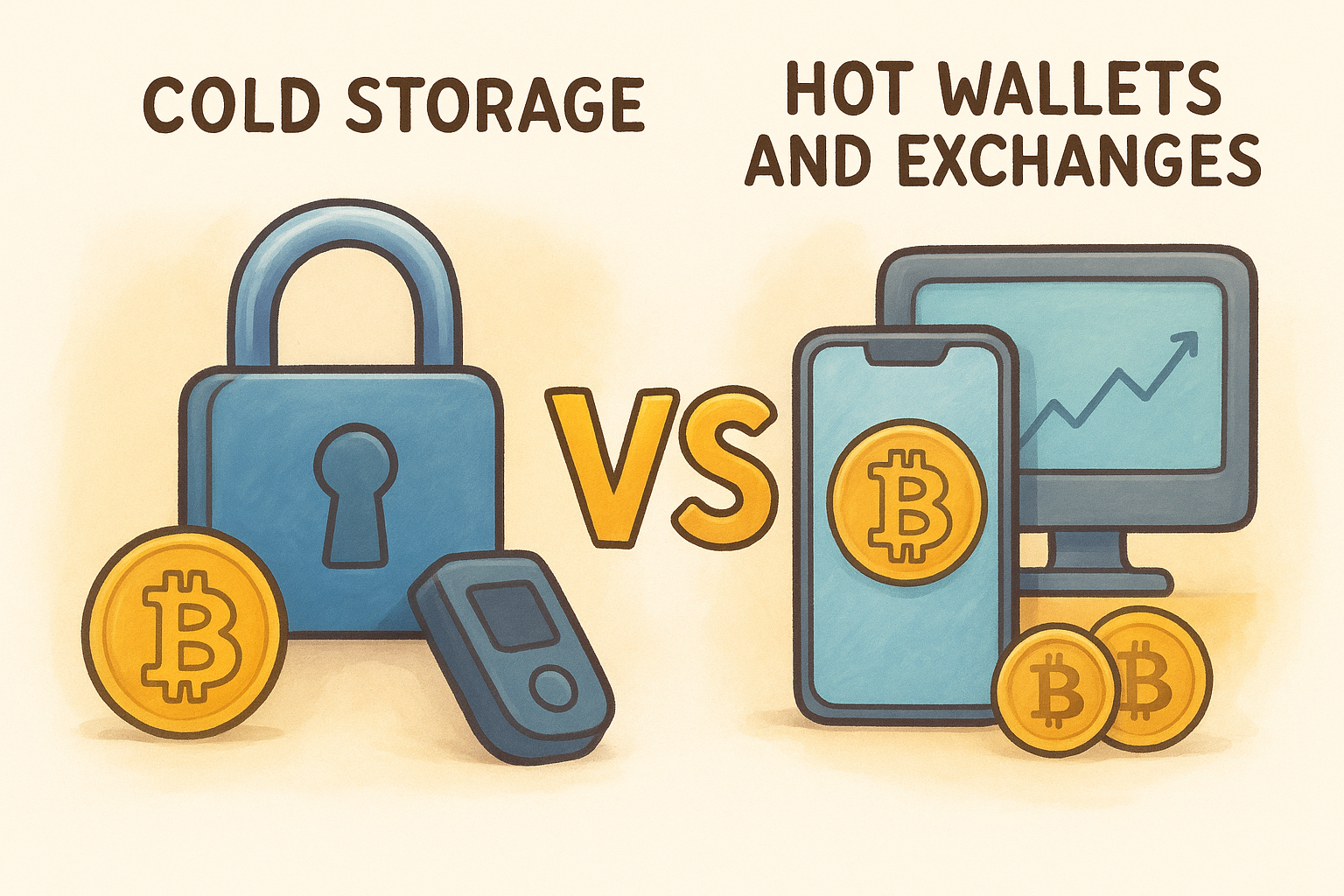
The core difference between cold storage and hot wallets comes down to internet connectivity. Hot wallets and exchange accounts keep your private keys on devices or servers connected to the internet, providing instant access for trading and spending. Cold storage physically separates your keys from any network, sacrificing convenience for maximum security. Understanding what is cold storage crypto helps you recognize why serious holders choose offline protection despite the extra steps required for transactions.
Internet connectivity and access
Hot wallets live on your phone, computer, or browser, giving you immediate access to your crypto whenever you need it. You can send transactions, check balances, and interact with decentralized applications without plugging in additional hardware. Exchange accounts work similarly, letting you trade or transfer funds with a few clicks. Cold wallets require physical interaction every time you move assets. You connect the device to your computer, verify transaction details on its screen, and manually confirm each action.
Hot wallets prioritize convenience, while cold storage prioritizes security by eliminating remote attack surfaces entirely.
Security model differences
Exchanges control your private keys through custodial arrangements, meaning the platform holds the actual ability to move your funds. Hot wallets on your devices store keys locally, but malware or phishing attacks can extract them. Cold storage gives you complete ownership because your keys exist only on the hardware device. Platform failures cannot affect your holdings, and remote exploits fail when the signing device never connects to the internet.
Types of cold storage and tradeoffs
Understanding what is cold storage crypto means recognizing that multiple offline methods exist, each offering different security models and usability tradeoffs. Hardware wallets dominate the market because they balance protection with practical access, but paper wallets and air-gapped devices serve specific needs for users prioritizing maximum isolation over convenience.
Hardware wallets with secure chips
Devices like Ledger and Trezor use dedicated secure elements that store your private keys in tamper-resistant chips. These wallets connect to computers via USB or Bluetooth for transaction signing, but the keys never leave the chip. You get straightforward setup processes, firmware updates for new features, and support for hundreds of cryptocurrencies. The tradeoff comes from relying on the manufacturer's security implementation and trusting their supply chain hasn't been compromised before the device reaches you.
Hardware wallets provide the best balance between security and usability for most holders managing multiple assets.
Air-gapped and paper storage
Air-gapped devices like Ellipal never connect to computers at all. You scan QR codes to transfer unsigned transactions to the device and scan back the signed result. This approach eliminates USB attack vectors entirely but requires camera functionality and QR scanning apps. Paper wallets take isolation further by printing your private keys and storing them physically. You sacrifice all digital convenience and risk paper degradation, fire damage, or loss, but no electronic device can compromise keys that exist only on paper.
How to set up and use cold storage safely
Setting up cold storage correctly determines whether you actually protect your assets or create new vulnerabilities through poor implementation. The process requires careful attention during initial configuration and consistent security habits afterward. Many users who understand what is cold storage crypto still compromise their protection by mishandling recovery phrases or skipping verification steps that ensure their hardware wallet functions correctly.
Initial setup and recovery phrase storage
You start by powering on your hardware wallet and following the on-screen prompts to generate a new wallet. The device displays your recovery phrase one word at a time. Write each word on physical paper in the exact order shown, never taking photos or storing it digitally. Verify you recorded the phrase correctly by re-entering it when prompted. Store your written backup in a secure physical location separate from the hardware device itself, such as a fireproof safe or safety deposit box. Consider creating multiple copies stored in different locations to protect against loss from fire, flood, or theft.
Your recovery phrase represents complete access to your funds. Anyone who obtains it controls your crypto permanently.
Ongoing security practices
Test small transactions before moving large amounts to confirm your setup works correctly. Always verify recipient addresses on the hardware wallet's screen before confirming transfers. Keep your device's firmware updated through official channels only, and never connect your hardware wallet to public computers or untrusted devices. When checking balances, use the wallet's companion software rather than entering your recovery phrase into any application.
Next steps
Now that you understand what is cold storage crypto and how it protects your holdings from exchange failures and remote attacks, you face a straightforward decision: continue trusting third parties with your private keys, or take control through offline storage.
Most holders start by researching hardware wallet options that match their technical comfort level and budget. You can compare secure chip devices against air-gapped alternatives, evaluate manufacturer track records, and consider how frequently you'll need to access your funds. The setup process takes less than an hour, but the protection lasts as long as you maintain proper recovery phrase security.
FinTech Dynasty provides detailed hardware wallet comparisons, safety checklists, and educational resources to help you implement self-custody correctly. Visit our complete guide to cryptocurrency security for side-by-side device evaluations and step-by-step tutorials that remove the guesswork from protecting your digital assets.