

How to Store Crypto Long Term Safely?
Last Updated: October 26, 2026
Quick Summary
To store crypto long term safely, use cold storage such as a hardware wallet or metal seed phrase backup that keeps your private keys offline and disconnected from the internet. Protect your seed phrase with multiple geographically separated backups, test your recovery process before you need it, and create a succession plan so your heirs can access your funds.
- Cold wallets stay disconnected from the internet, making them significantly harder for attackers to compromise than hot wallets.
- Store your seed phrase on metal rather than paper, which survives fire and water that would destroy paper backups.
- Keep at least three geographically separated backups so a single regional event cannot destroy all of them.
- Test your recovery process with a test wallet before relying on your backup in an emergency.
- Create a written succession document stored separately from your seed phrase so your heirs can find and access your crypto.
Table of Contents
- Understanding Cold Storage vs Hot Wallet for Long-Term Holdings
- Choosing the Best Cold Wallet for Long-Term Storage
- How to Store a Crypto Seed Phrase Securely
- Crypto Wallet Backup and Recovery Best Practices
- Securing Your Digital Assets Against Common Threats
- Planning for Long-Term Access and Digital Inheritance
- Start Your Secure Self-Custody Journey Today
- Frequently Asked Questions
Understanding Cold Storage vs Hot Wallet for Long-Term Holdings
When you own cryptocurrency, you face a fundamental choice: whether to store crypto long term offline or keep it online for active use.
A hot wallet stays connected to the internet. It's fast and convenient, but if someone breaches it, they can drain it in seconds.
A cold wallet is different. According to FINRA guidance on crypto asset storage, cold wallets are disconnected from the internet and tend to be better for long-term storage because they are harder for malicious actors to hack.
The trade-off: cold storage is more secure but less convenient. For money you hold for years, the friction is worth it; for money you trade actively, it's not.
Choosing the Best Cold Wallet for Long-Term Storage
The best cold wallet depends on your holding size, technical comfort, and recovery plans.
Hardware Wallets: Security and Usability Balance
A hardware wallet is a physical device that stores your private keys offline; you plug it in only to send a transaction. The device signs offline, you approve, and the signed transaction goes to the network, your keys never leave the device.
Popular hardware wallets include Ledger, Trezor, and Coldcard. Learn about the best cold storage wallets to compare features and find the right option for your needs.
Paper Wallets and Offline Alternatives
A paper wallet is your private key printed on paper: generate it offline, print it, store it safely, and import the key back into a wallet to spend later.
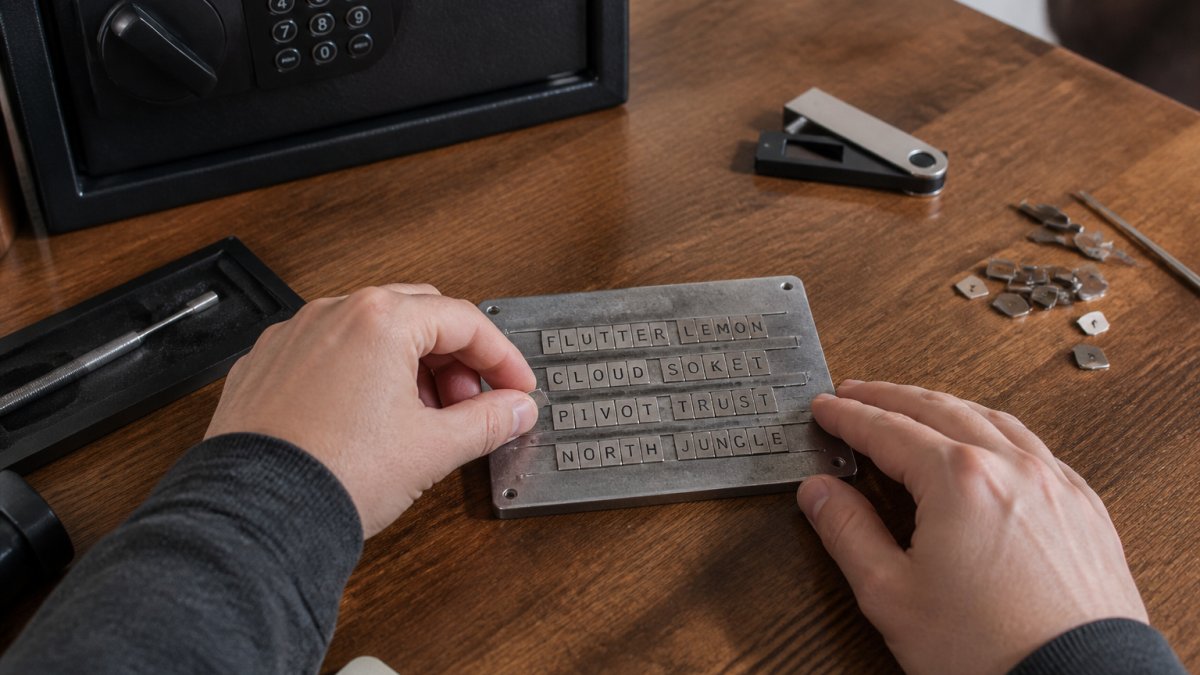
A better alternative is a metal seed phrase storage system: stamp or engrave your recovery phrase onto metal plates that don't burn or rot. FinTech Dynasty offers crypto seed phrase storage solutions built with durable metal construction to survive disasters that would destroy paper.
How to Store a Crypto Seed Phrase Securely
Your seed phrase is your master key: 12 or 24 words that can recreate your entire wallet. Learn how to secure crypto seed phrases with detailed beginner guidance on protecting this critical component of your long-term storage.
Protecting Your Recovery Phrase from Physical Damage
Never store your seed phrase on your computer, photograph it with your phone, or email it to yourself, digital copies can be hacked, leaked, or lost in a data breach. Write it down, ideally on metal, which survives what paper doesn't. Store multiple copies in different locations, geographic redundancy, so a house fire or flood can't destroy them all: a bank safe deposit box, a fireproof safe at home, or a trusted family member's house.
Multi-Location Backup Strategy
The best backup strategy uses three locations. Location 1: your primary safe at home, holding your hardware wallet and first seed phrase backup for quick access. Location 2: a secondary location far away, a safe deposit box in another city, a trusted family member's house, or a box at a different bank, so this backup survives if your home is destroyed. Location 3: a tertiary remote location as insurance if locations 1 and 2 are both compromised.
| Backup Location | Purpose | Best For |
|---|---|---|
| Primary (home safe) | Quick access, primary storage | Everyday security |
| Secondary (remote location) | Geographic redundancy | Protection against local disaster |
| Tertiary (additional remote) | Final insurance policy | Protection against widespread loss |
Crypto Wallet Backup and Recovery Best Practices
Backing up your wallet means copying your seed phrase to restore access if your device is lost, stolen, or broken. Most people back up once at setup and never think about it again, a mistake, because a backup is only useful if it still works years later, after firmware updates and app changes.
Testing Your Recovery Process Before You Need It
Test your recovery while everything is working, before you lose your device.
- Create a new test wallet on a separate device or in a new software wallet. Do not use your real funds.
- Write down the seed phrase from this test wallet.
- Wait a few days. This simulates real-world conditions where you might not access your backup immediately.
- Use your backup to restore the wallet. Import the seed phrase into a fresh wallet app. Verify that the same address appears and that any test funds are visible.
- Document what worked and what didn't. Was your handwriting legible? Did you remember where you stored the backup?
If something fails, you discover it now, with no real money at risk. Most people skip this step and assume their backup will work. Don't be that person.
Planning for Device, Software, and Protocol Obsolescence
A decade is a long time in crypto. Hardware wallets go out of production, companion apps get discontinued, and networks occasionally change how addresses or signing work. Build a maintenance habit:
Metal Crypto Seed Phrase Storage, BIP39 Recovery Phrase Cold Storage Backup →
- Once a year, check your hardware wallet vendor's support page for firmware updates and end-of-life notices, and note whether replacement devices and the companion app are still maintained.
- Confirm your seed phrase standard is still supported. Most wallets use BIP39 mnemonics and BIP32/BIP44 derivation paths; if you use a non-standard path or a passphrase, record that detail separately so a future restore uses the right settings.
- Keep a written record of the wallet model, firmware version, and derivation path alongside, but not with, your seed backup, so a future you (or an heir) can restore correctly.
Disaster-Resistant Backup Planning
Offline storage is not automatically disaster-resistant. Paper burns, floods soak, and a single safe can be opened, stolen, or destroyed. Plan against specific hazards:
- Fire and water: Metal seed storage survives both; paper and most plastics do not. A fireproof safe helps but is rated for limited time and temperature, do not treat it as absolute.
- Theft and coercion: Split your backup so no single location reveals the full seed, store the phrase in two geographically separated parts, or use a multi-signature setup where no single key can move funds alone.
- Geographic separation: Keep backups in at least two, ideally three, locations far enough apart that a single regional event cannot destroy all of them.
A backup plan is only complete when you have tested a restore from each location and confirmed the instructions are legible to someone other than you, which matters for inheritance, covered next.
Securing Your Digital Assets Against Common Threats
Long-term storage reduces your exposure to online attacks, but it does not eliminate risk. A $500 holding and a $500,000 holding do not warrant the same defenses. Here is a threat model you can actually apply.
Threat Modeling by Holding Size and Skill Level
Match your safeguards to the consequences of loss. Long-term holders commonly tier defenses into three bands:
- Small holdings (roughly under a few thousand in local currency): A reputable hardware wallet with a single well-hidden seed backup is usually proportionate; elaborate redundancy can cost more than the value at risk.
- Mid-size holdings (painful but not life-changing to lose): Hardware wallet plus two geographically separated metal seed backups, one recovery drill per year, and a documented access plan for a trusted person.
- Large holdings (life-changing sums): Multi-signature or split-key setups, three or more backups across jurisdictions, a formal succession document held by a lawyer or executor, and periodic recovery rehearsals.
Skill level matters as much as size. If you are not confident restoring a wallet from a seed phrase, complexity increases the chance you lock yourself out. A simple setup you understand beats an elaborate one you don't.
The Threats That Actually Cause Long-Term Loss
Ranked roughly by how often they cause permanent loss:
- Accidental loss and forgotten access. The most common failure is not theft, it is a holder who cannot find a backup, cannot read their own handwriting, or has forgotten the PIN and where the recovery material is. Multiple backups and a documented plan address this.
- Physical theft and coercion. Someone steals the hardware wallet or backup, or pressures you to unlock it. A PIN with limited attempts helps against casual theft; a passphrase (a 25th word) adds a hidden layer, but only if you can reliably remember and back it up separately.
- Fire, flood, and structural damage. Paper and many plastics do not survive. Metal seed storage survives fire and water; a fireproof safe adds a layer but is no substitute for geographic separation.
Proportionate Safeguards in Practice
A practical rule: spend no more than a small fraction of your holding on storage and backup, but never skip the steps that protect against permanent, unrecoverable loss. Geographic redundancy, metal backups, and a tested recovery process most reliably prevent the failures long-term holders actually experience.
Planning for Long-Term Access and Digital Inheritance
Crypto creates a problem traditional assets don't: only you can access your funds. If you die, your heirs have no way to find your crypto, let alone access it, people die with crypto in their wallets every day, and their families never recover it.
Start by creating a document. Write down:
- The location of each backup (primary, secondary, tertiary)
- How to access each location (safe combination, safe deposit box key, contact information for the person holding it)
- Instructions for restoring the wallet from the seed phrase
Store this document somewhere your heirs can find it, but not with your seed phrase itself. Learn how to pass crypto to your heirs without creating a disaster to ensure your inheritance plan is complete and secure. A lawyer's office works.
Start Your Secure Self-Custody Journey Today
Storing crypto long term safely requires three things: choosing the right wallet type, protecting your seed phrase, and planning for recovery or inheritance. Cold storage handles the first, metal backups the second, and a succession plan the third.
None of this is complicated, it's just methodical. Follow a process, test it, document it, and you're done. Your crypto is safer than it would be on an exchange or in a hot wallet.
FinTech Dynasty provides structured, independent guidance on exactly how to do this, with a focus on clarity and practical understanding so you can make informed decisions about your digital security.
Frequently Asked Questions
What is the safest way to store crypto long term?
Cold storage, keeping your cryptocurrency offline in a hardware wallet, paper wallet, or other disconnected device, is the safest method for long-term holdings. Cold wallets eliminate exposure to online hacking and malicious actors. Store your seed phrase (the recovery phrase that controls access to your assets) in a fireproof, waterproof location separate from the wallet itself. FINRA confirms cold wallets are harder for attackers to compromise, though you must still protect your recovery information and maintain access to it.
Can you lose cryptocurrency stored in a cold wallet?
Loss can occur if you forget your password, lose your seed phrase, or damage your backup without a secondary copy. Cold storage reduces online theft risk but does not eliminate the risk of permanent loss through user error. Always test your recovery process on a small amount first. Create multiple backups stored in separate secure locations, a fireproof safe and an offline backup, for example, so one damaged copy does not leave you locked out.
How should you store a crypto seed phrase safely?
Write or engrave your 12- or 24-word seed phrase on metal or paper and store it in a fireproof, waterproof location such as a safe deposit box or home safe. Never store it digitally, photograph it, or email it. Use a metal seed phrase storage kit (like the BIP39-compatible plate with 480 metal letter tiles) to preserve the full word without abbreviations, which reduces recovery mistakes. Keep one backup in your home safe and a second in a separate secure location to protect against total loss from fire, flood, or theft.
Is a hardware wallet better than a software wallet for long-term storage?
Yes, for long-term storage. Hardware wallets keep your private keys offline and disconnected from the internet, making them far more resistant to hacking and malware. Software wallets (mobile or desktop) remain connected and expose you to online threats. Hardware wallets balance security with usability, you can still access and transfer funds when needed, while paper wallets offer maximum security but less convenience. Choose a hardware wallet for most long-term holders, and paper wallets only if you plan to never move the funds.
Your crypto is yours to protect. The tools exist. The knowledge exists. What's left is taking action.
